When Chelsey talks about statistics, her eyes light up.
What began as a second-choice university placement has grown into a calling — one built on persistence, family sacrifice and the steady support of a scholarship that kept her education within reach.
Chelsey, a fourth-year student studying statistics at the University of Nairobi, is preparing to graduate soon. Her journey into higher education wasn’t guaranteed. In fact, without scholarship support, she says it likely would not have happened at all.
“I know for a fact it would have been very hard,” Chelsey said. “Without the support, I would have had to drop out.”
Chelsey grew up in Nairobi, Kenya, as part of a family of six. Her father works security jobs and takes on other casual labor. Her mother cleans homes and institutions when work is available. Income has always been uncertain, but commitment to their children’s education never wavered.
“My parents are very motivated and dedicated,” Chelsey said. “They always made sure we got what we needed, even though it was hard for them.”
That dedication was tested when Chelsey finished primary school. At the same time she was preparing to enter secondary school, her older brother was also advancing in his education. Paying both sets of fees — along with supporting two younger daughters — was beyond what her parents could manage alone.
Her father began searching for help and found Unbound’s scholarship program. Chelsey wrote an application letter describing her academic performance and her goals. In 2017, just before she entered high school, she received the scholarship.
That support changed everything.
March 10, 2026 | Scholarship Program
Numbers, hope and opportunity
A college student uses math and an Unbound scholarship to forge a future free from poverty
By Jordan Kimbrell
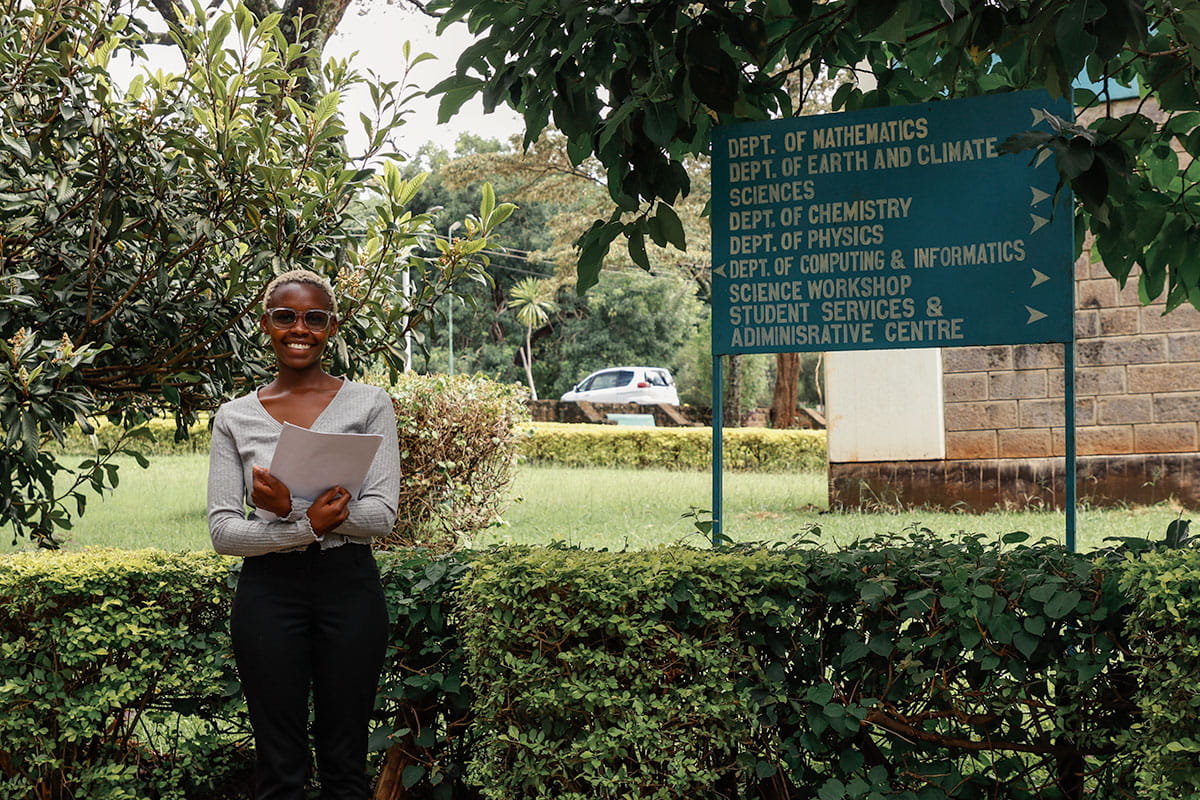
Chelsey, who is not sponsored through Unbound, received an Unbound scholarship in 2017 that helped her realize her dream of attending college at the University of Nairobi.
Studying against the odds
Today, Chelsey spends up to two hours commuting to campus when she needs to attend classes in person. Transportation alone can cost what equals several U.S. dollars a day — a significant expense for her family. To save money, she studies from home whenever possible, downloading materials where she can find internet access through friends or her church.
Connectivity and power outages create additional challenges. Many assignments and research tasks require online access, yet reliable internet and electricity are not guaranteed.
“Sometimes you are doing a project and suddenly there are no lights,” she said. “Everything just goes to waste.”
Even so, she has built routines and partnerships that help her continue. She coordinates group work on days when she is already on campus. She borrows books from the university library to use at home. She studies during daylight hours to avoid evening power disruptions.
The scholarship covers roughly half her tuition each semester, with the remainder pieced together through government grants and student loans. All Unbound scholarship funds go directly to her school fees, ensuring she can remain enrolled and sit for exams without interruption.
“That half goes a very long way,” she said. “It keeps me from missing classes or exams.”
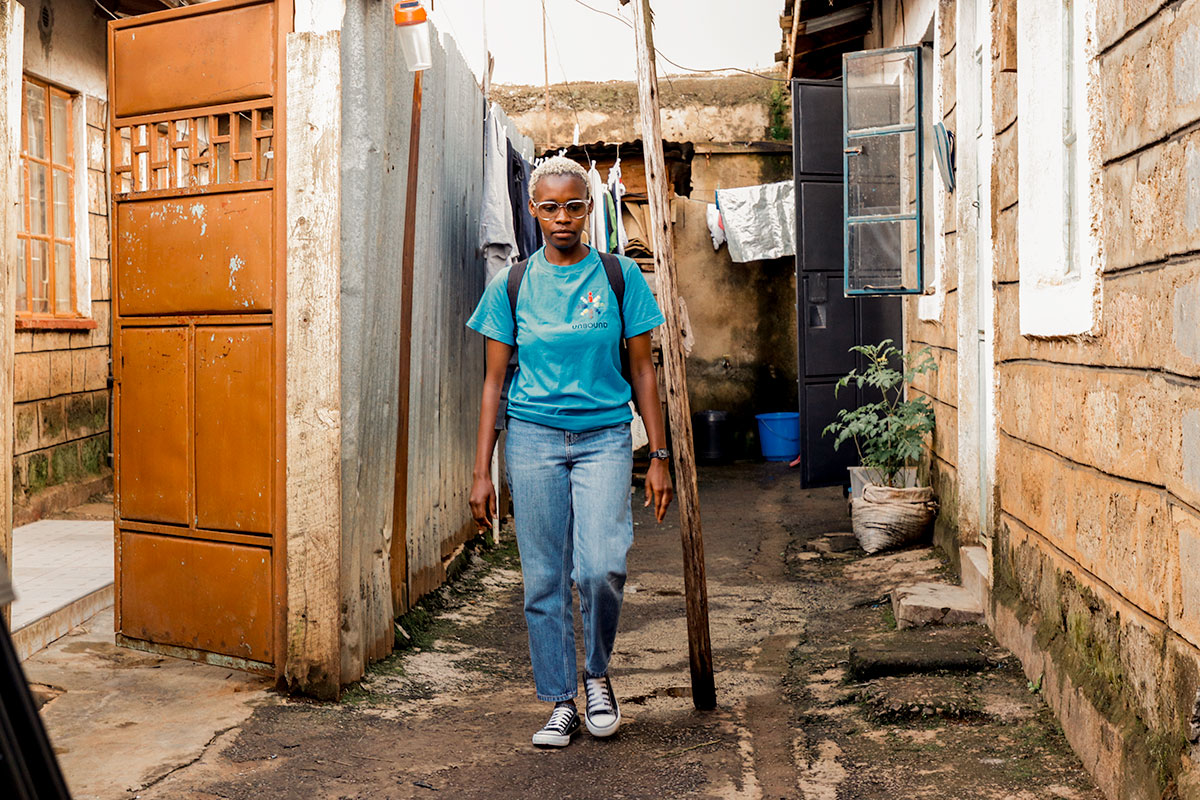
Chelsey both walks and takes a tuk-tuk (a local taxi) to reach campus when she needs to attend in-person classes, a journey that takes up to two hours.
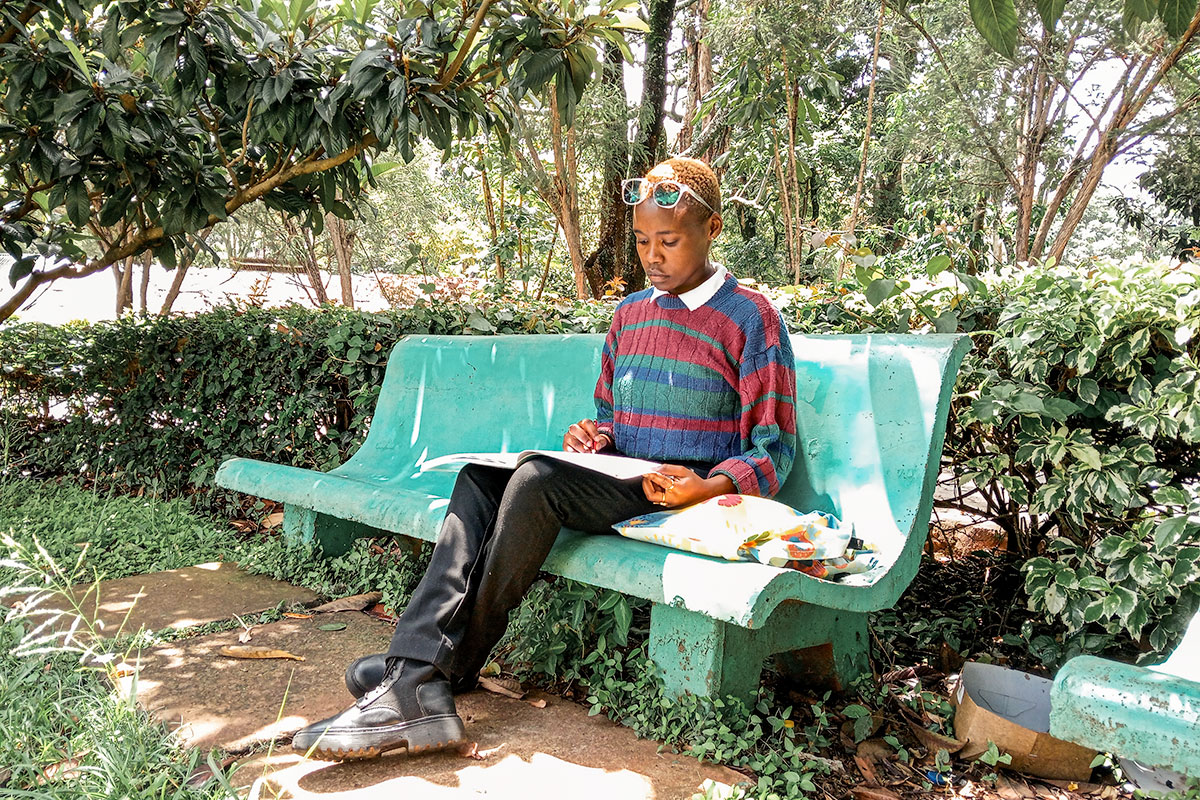
Chelsey studies on the University of Nairobi campus before class.

Chelsey studies by lamplight at home in Nairobi. One of Chelsey’s barriers to education has been power outages at night, which are frequent in her community and interrupt her homework sessions.
Discovering a love for data
Chelsey originally planned to study engineering, but changing admission thresholds redirected her into statistics. Because she already loved mathematics, she accepted the placement — and discovered a field that fascinated her.
Statistics, she explained, go far beyond numbers on a page. She studies data analysis, coding and statistical tools such as Excel, R (a free, open-source programming language) and other software platforms. What excites her most is uncovering what lies beneath the surface.
“There’s more than what we see,” she said. “There are deeper things to explore.”
Her skills are already helping her family. Her father belongs to a local savings and investment group and often turns to Chelsey for help with calculations and records. He proudly points to her abilities when speaking with others.
Being able to contribute in that way feels meaningful, she said.
“It’s a good feeling being able to be a role model.”
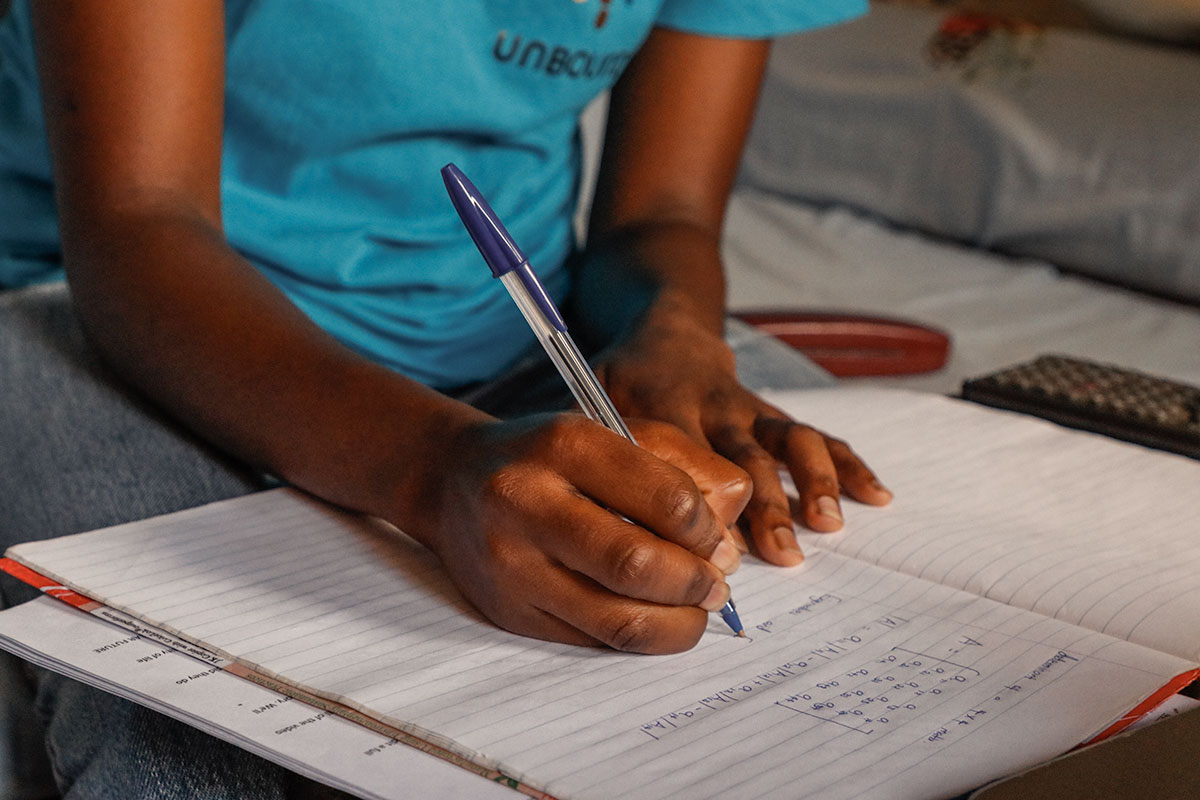
Chelsey’s statistics focus is giving her skills in data analysis, programming and software competency that will help her be competitive in her field once she graduates and seeks a job.
Learning to lead by serving
Scholarship support has included more than financial help. Chelsey also participates in mentorship programs, team-building sessions and community service — experiences she said have shaped her confidence and perspective.
“Mental health, networking, how to relate with others — we learn a lot beyond school,” she said. “That is very important for us as young people.”
For several months each year, she volunteers in her community. After an early placement in a hospital setting, she discovered her passion for tutoring and mentorship. Now she helps children from 6 to 15, focusing especially on math and science. She also works with younger children on basic learning and creative activities.
“Some of these kids are not really exposed to education,” she said. “They really want to learn. It gives me the drive to do better so I can support kids like them later.”
Service has also strengthened her resolve during difficult moments. Like many students facing financial and academic pressure, she admits she has sometimes thought about quitting. What stops her is a sense of responsibility, both to herself and to those watching her example.
“If I have an opportunity and I give up, what about those who don’t [have the same]?” she said. “I also remind myself I must get better for me, so I can pour into others later.”
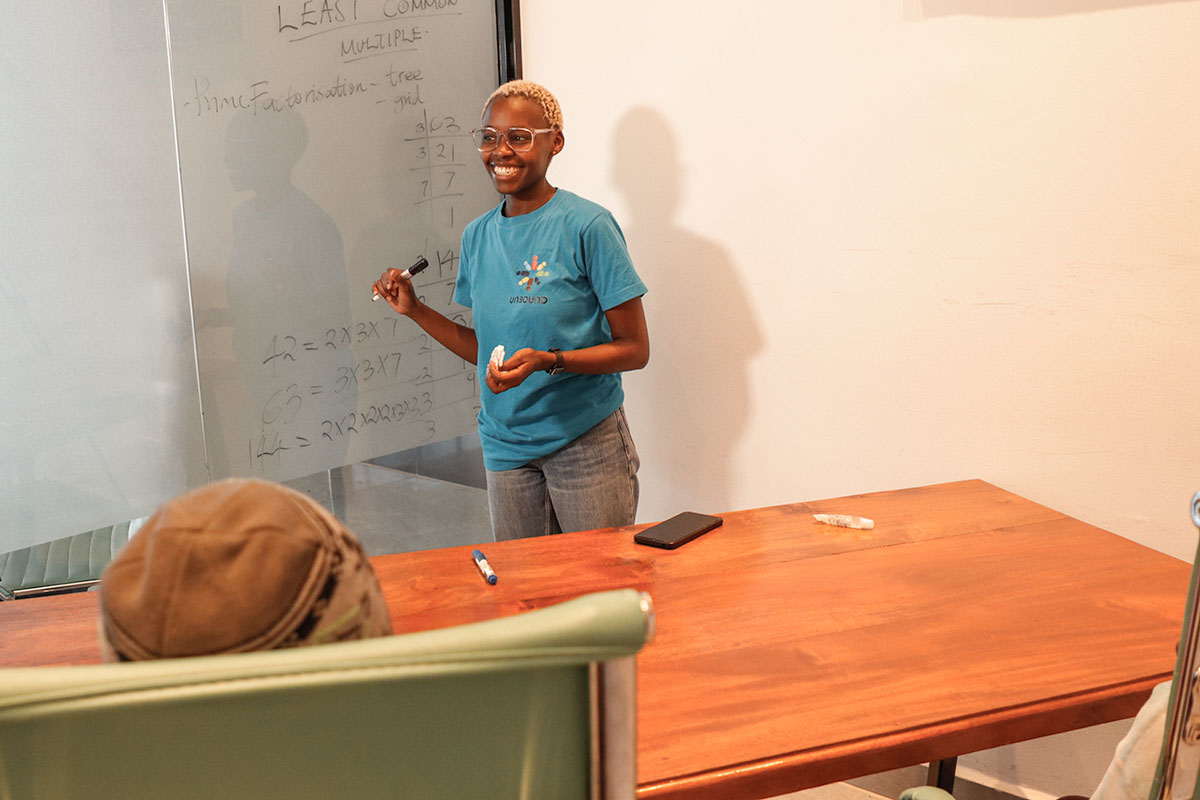
As part of her community service through Unbound’s scholarship program, Chelsey tutors students in math and science, an experience that has shaped her perspective and helped her build her confidence.
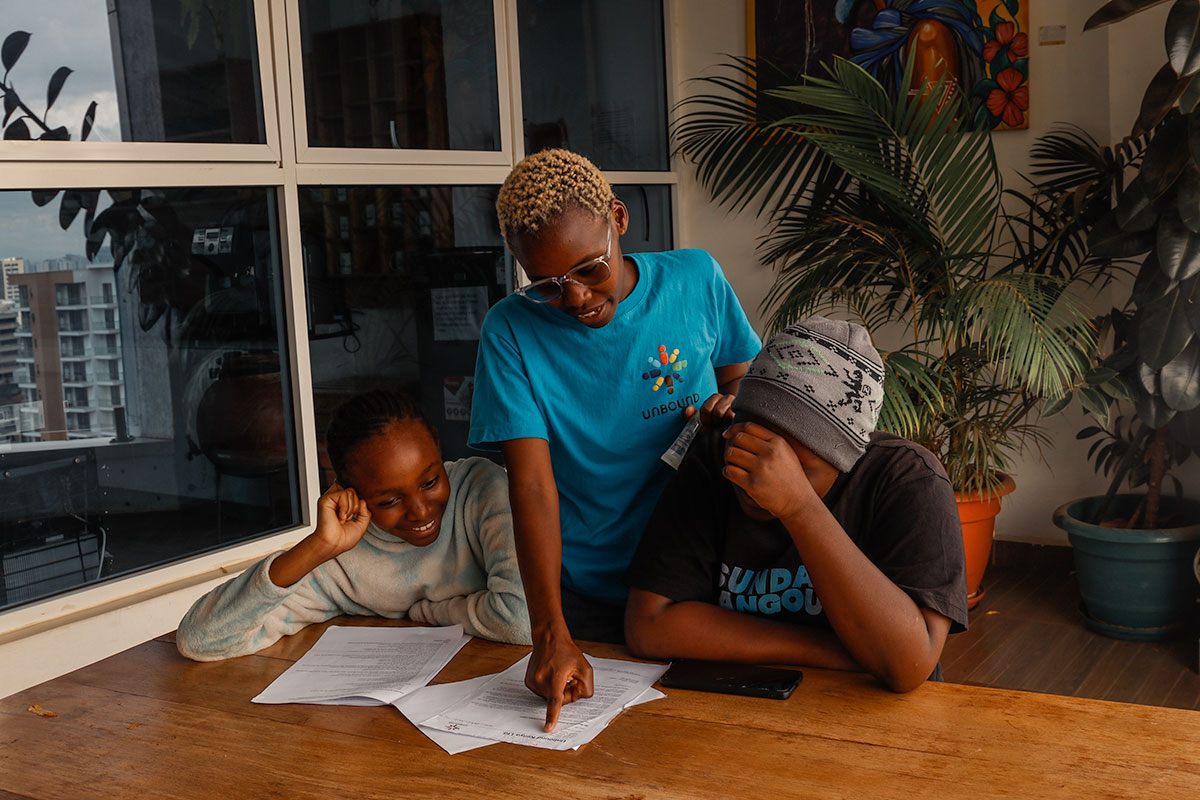
Chelsey mentors two students, Claudia (left) and Lindsey, in a self-study area on the University of Nairobi campus.
A future that multiplies impact
Chelsey expects to graduate soon and hopes to build a career in data and analytics. She is realistic about a competitive job market but believes initiative and positioning matter. Education, she said, gives her tools not only for employment but for wiser decisions in every area of life.
“Education opens your mind,” she said. “It changes how you see things.”
She often thinks about the difference between who she was before receiving the scholarship and who she is becoming now.
“The opportunity changed my perspective on life and education,” she said. “It gave me exposure and hope.”
To those who support scholarship programs, her message is simple and heartfelt: Your help grows beyond what you can see.
“It’s like planting and watering a seed,” she said. “The more you water, the more it sprouts. The results will be seen later.”
Partner with students like Chelsey as they work to realize their dreams of an education when you make a one-time or monthly donation to the Unbound Scholarship Program today.
If I have an opportunity and I give up, what about those who don’t [have the same]? I also remind myself I must get better for me, so I can pour into others later.
— Chelsey, Unbound scholar and statistics student in Kenya
Unbound regional reporter in Africa Nickson Ateku contributed information and photos for this story.