More than 100 million people worldwide are affected by natural disasters each year, according to Our World in Data (OWID).
From earthquakes and typhoons to floods and droughts, natural disasters are responsible for the deaths of tens of thousands annually. Others find themselves injured, displaced, homeless, pushed into food insecurity or with their livelihoods disrupted.
Natural disasters and other unexpected setbacks take a disproportionate toll on people living in poverty, often destroying any headway they’ve made in improving their situations.
Now, as global warming continues to intensify weather extremes, climate experts warn that a potentially record-breaking El Niño could converge with other climate-related impacts through late 2026 and early 2027.
Across the three regions of the world where Unbound has a presence, individuals and families are responding to changing conditions, making difficult decisions and adapting to protect their livelihoods and futures.
In Central America alone, the World Food Programme has estimated that El Niño-fueled droughts could cause the number of food-insecure people to increase by as much as 80%.
As weather events become more frequent and severe, preparedness and timely support can help families protect years of hard-won progress and continue pursuing their goals despite unexpected setbacks.
November 11, 2026 | Disaster Response
Poverty in times of disaster: Families confront food insecurity in wake of El Niño
Drought drives failed harvests and uncertainty in Central America
By Kati Burns Mallows
Waiting for the rain that never came
In a dusty cornfield, along the steep eastern shore of Lake Atitlán, Unbound Guatemala Coordinator Francisco Chavajay Yojcom is deep in thought.
This year, he has heard children in the villages say, “I hope it rains,” and hearing this peculiar statement from ones so young has stopped him in his tracks.
“In the past, the rain did not attract so much attention,” he explained. “But now, besides it being a necessity, we truly miss it as part of life.”
In Guatemala, the average amount of annual rainfall may range from 50 to 150-plus inches, depending on location. In a country where agriculture is a major pillar of the workforce and rural economy, rain is vital to survival in more ways than one.
Many inhabitants, according to Chavajay, grow their own food. Additionally, a surplus can be taken to local or national markets and sometimes even exported, providing families income. Seeds gathered from harvests from one season may be used for planting the next season.
The rainy season is May through October, but this year, the rainfall ceased mid-May. According to Chavajay, the entire agricultural sector — from staple grains and fruits to feed such as grass for livestock — began to suffer starting in June.
Recently, Chavajay visited with an Unbound group of mothers in a community and asked how their crops were doing.
“One mother, her voice broken, told me, ‘This year, we could not plant,’” Chavajay recalled. “She said, ‘We waited for the rain, we prepared the land, and the rain never came.’”
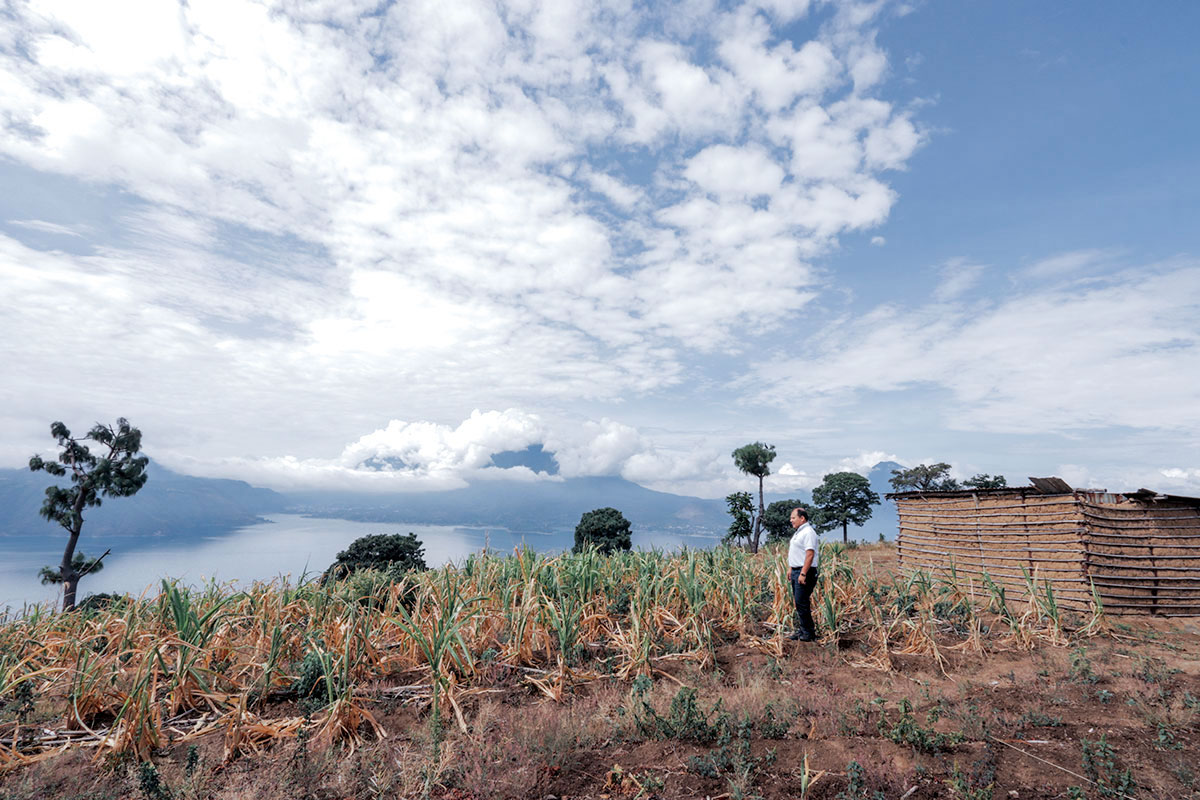
Unbound Guatemala coordinator Francisco Chavajay Yojcom studies a dry corn crop on a bluff overlooking Lake Atitlán. Prolonged drought this year has created one of the most severe agricultural crises many in Guatemala can remember, Chavajay said.
Agriculture is the economic sector most vulnerable to severe climate events. According to the United Nations Office for Disaster Risk Reduction, over 80% of all damage and loss caused by drought in previous years was borne by agriculture in low- and-middle-income countries.
In October, The World Meteorological Organization (WMO) reported that the current El Niño event could be “unprecedented in strength,” the strongest in four decades.
An El Niño occurs every two to seven years when water in the eastern Pacific Ocean warms up around the equator. That water releases massive heat into the atmosphere, which shifts weather patterns all around the world, causing destructive flooding in some regions and exacerbating drought and extreme temperatures in others.
Climate experts put El Niño at its peak between November 2026 and January 2027, but aftershocks could extend much further.
By the end of 2027, the UN World Food Programme estimates El Niño could push at least 49 million more people globally into acute food insecurity.
Guatemala, unfortunately, sits right in the zone where El Niño’s drying signal is strongest, and the residual dryness it leaves behind could have a devastating impact on the 2026-2027 planting cycle.
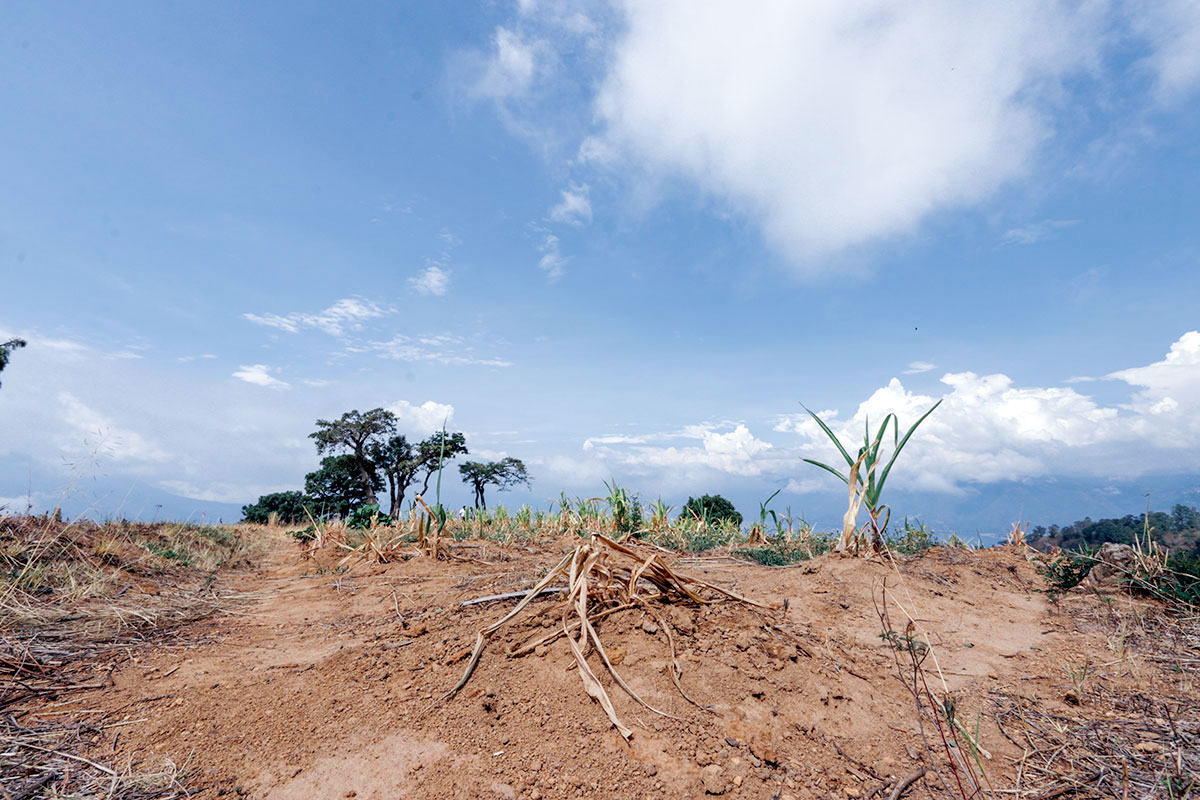
An underdeveloped cornfield in Guatemala bakes beneath intense sunlight, which Chavajay said has also been an unusual challenge for humans, crops and livestock in their area at this time of year.
Food security threatened by drought in Central America
In the household of Griselda and Jeremías, corn is a staple food, eaten almost daily.
The family of six lives in a rural farming community in Guatemala where they grow corn and beans, not just for sustenance, but for a source of income.
However, this season they predict they will lose most, if not all, of their corn harvest to drought. The loss will have a ripple effect across their lives and follow them into the next planting season.
The family rents the land they farm. Without a proper corn harvest, they will not be able to replenish their corn reserves that they both consume and use to generate income throughout the year. Without that source of income, renting the land they’ll need to plant the next harvest will be out of the question.
“We would have to buy what we did not produce this year, and our expenses are already too great,” explained Griselda, whose son Jonathan is sponsored. “It will affect our food supply greatly.”
The family has begun rationing last season’s corn reserves in the hope that their food supply will stretch into the next harvest in 2027.
“Wherever that takes us, I hope that we will be able to defend ourselves a little against this situation,” Griselda said.
Chavajay said hunger among families like Griselda’s has not yet become evident but is something on the horizon as failed harvests lead to shortages, especially of staple grains and vegetables.
“They will be very vulnerable next year and possibly exposed to malnutrition due to lack of a balanced diet,” he said. “That is the major concern for the coming year.”
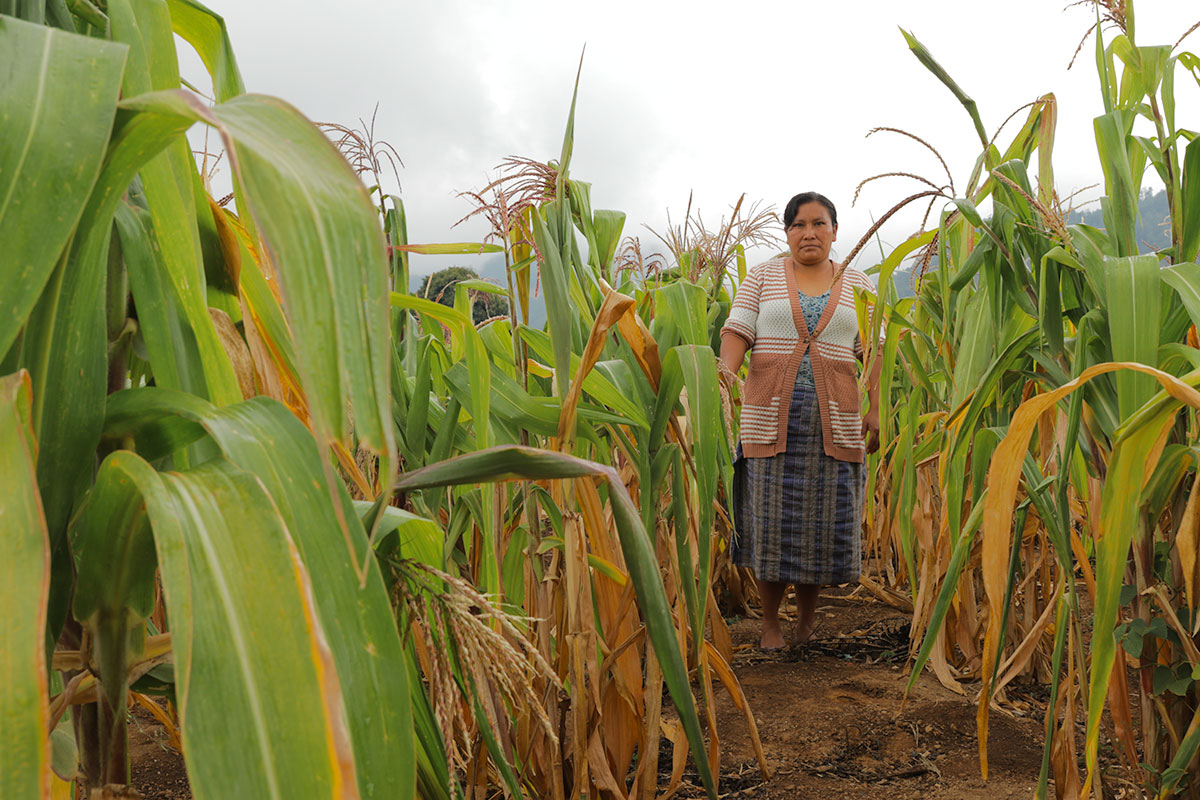
Griselda walks among the stalks in her family’s cornfield they plant on rented land. Despite it having rained in recent days, Griselda believes the rain came too late for her crop which had reached full growth already.
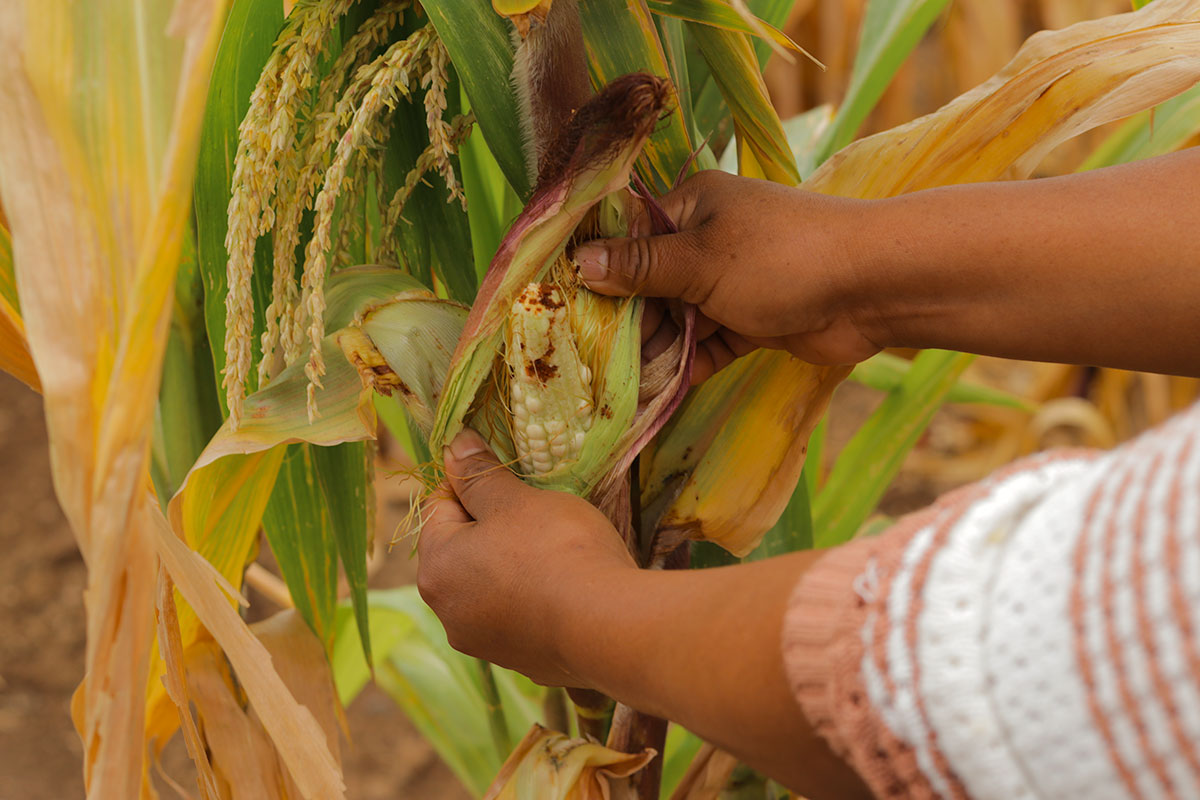
Griselda hopes to still be able to salvage seeds from this year’s corn crop to use for next planting cycle. Many ears of corn were underdeveloped due to drought, as shown above.
In El Salvador, families are having similar experiences.
Along with other Central American countries, the Salvadoran government declared a red alert in August for “meteorological and agricultural drought,” and Reuters reported the situation could push 700,000 people into immediate need of emergency response.
María Noris, a mother of three in Santa Ana, El Salvador, said she and her husband Moris anticipate losing between 40-50% of their corn crop this season due to drought, and their bean crop planted in May was a total loss.
The family of five borrows money each season to plant their crops and pays back their debts with what they harvest. Without a harvest this season, the family will not be able to pay their debts and will likely have to reduce how much they plant next season.
Anything they can salvage from this year’s harvest, they plan to store.
“We do not know what next year will be like,” María Noris said. “But we all need to have food on our plates.”
Gabriela Yamilet Guerrero de Calderón, a social worker with Unbound in El Salvador, said around 80% of families in Unbound’s program in Santa Ana work in agriculture. Because many families use loans to buy fertilizers and seeds to plant their crops each year, she has seen many faced with significant losses this season.
“The plans they had or what they intended to do with profits from their harvest — improving their home or paying for medical treatment, for example — those plans will be cut short,” Calderón said.
But loss of income and food security aren’t the only impacts families are confronting. Water has also become scarce.
In El Salvador, María Noris has seen her family’s water bill increase significantly, putting additional strain on their household expenses and irrigation for their crops.
In Guatemala, mountain streams and wells where rural families typically collect fresh water have experienced a drop in water levels.
“We are facing a very difficult situation, but we trust in God that rainfall may help stabilize somewhat during the remainder of the year,” Chavajay said.
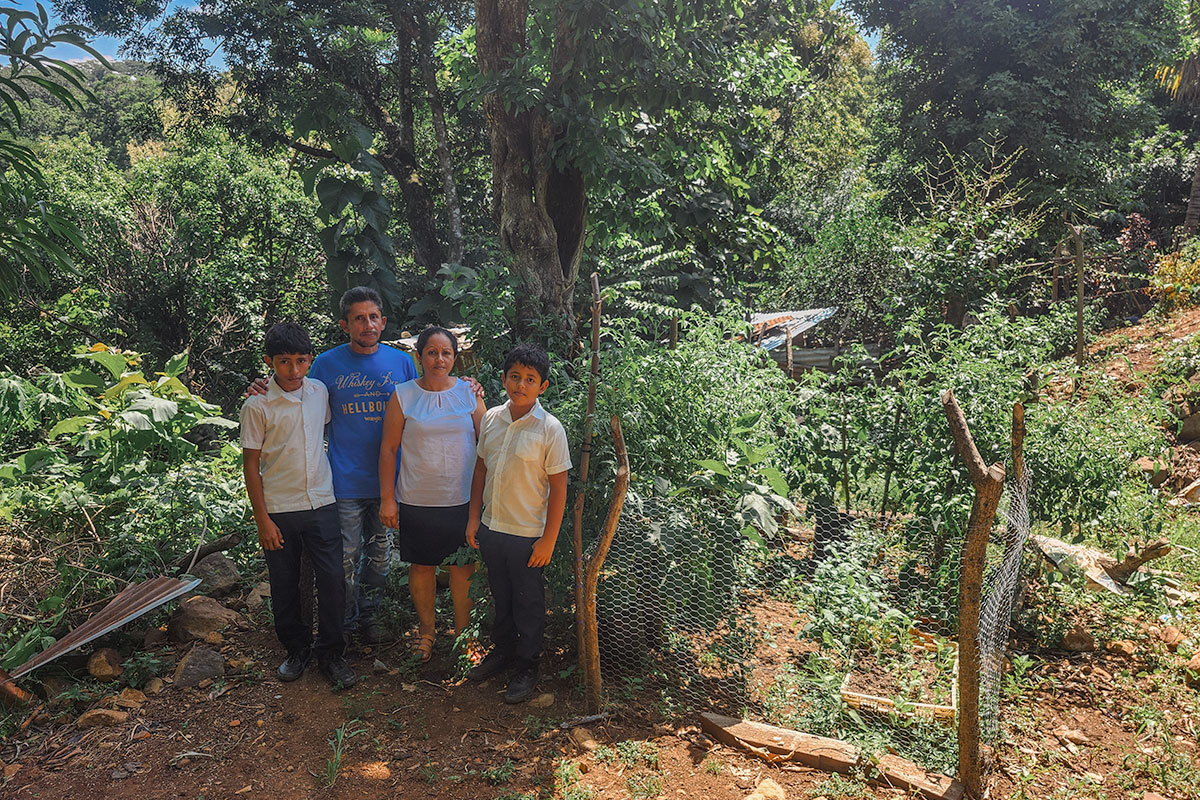
María Noris and her husband Moris (both pictured center) grow corn, beans and sorghum in El Salvador and believe they will only be able to harvest 25% of their crops this year due to drought. Here, they are pictured with two of their sons Oscar (left), who is sponsored, and Alonso, in front of the family vegetable garden.
We do not know what next year will be like. But we all need to have food on our plates.
— María Noris, Mother of sponsored child in El Salvador
Adapting to a new reality
The National Oceanic and Atmospheric Administration (NOAA) has estimated a 75% chance that the current El Niño event will exceed all El Niño episodes since 1950. It will impact all regions of the world where Unbound has a presence with either heavy rains or intense heat, with a 90% probability that aftershocks will persist until mid-2027.
While it’s hard to predict where the greatest impact might be right now, many families are already adapting and, as Chavajay said, treating resiliency as an “investment in the future.”
In Guatemala, he said some families have begun rationing their water supplies but also learning how to recycle water. For example, water used in the kitchen may be used later to irrigate the family garden. Chavajay said that to encourage families to focus on nutrition, local staff may begin to promote the importance of maintaining a family garden once again.
In El Salvador, María Noris has been participating for the past six months in an Unbound agricultural school that launched after receiving support from the Innovation Fund in 2025. The goal of the school is to strengthen the productive, organizational and environmental capacities of subsistence farmers through an educational approach grounded in agroecology, climate resilience and popular education.
“With the school, we wanted to create or promote a sense of autonomy within families, so that they can produce their own food in a healthier way,” Calderón said.
María Noris has learned how to prepare the soil for her own vegetable garden, while also uniting with other families to maintain community gardens. She has learned to grow organic tomatoes, green onions, eggplants and peppers. From her garden, she’s been able to feed her family salads, radish leaf patties and pupusas she’s prepared, among other things.
“It has been a beautiful experience, and I have learned a lot,” María Noris said. “We have been able to see that what we have harvested and what we have achieved has been all natural, no chemicals used.”
When creativity and resilience alone are not enough to overcome a disaster, families and communities can draw on support from Unbound’s Critical Needs Fund to meet urgent needs and begin rebuilding.
The Critical Needs Fund provides direct cash assistance and other emergency relief to families in times of crisis. Families use this support to address their most immediate needs, whether purchasing food, water and medical care, repairing damaged homes or restoring livelihoods.
“You never really know when an emergency will happen or when a family will be impacted by a weather event,” Calderón said. “If there was no emergency fund available to us, we would not have a way to support the families during these situations.”
Chavajay said as Unbound Guatemala staff are familiar with families’ situations and, as they conduct home visits, they’ll evaluate each family’s needs.
“Our approach has always been the same — provide immediate emotional support, pause and reflect on what material assistance is needed, and then intervene where the need is greatest,” Chavajay said.
“I think in the coming months, the questions of what to do will become even more urgent. Thank God, Unbound has this valuable resource called Critical Needs Fund.”
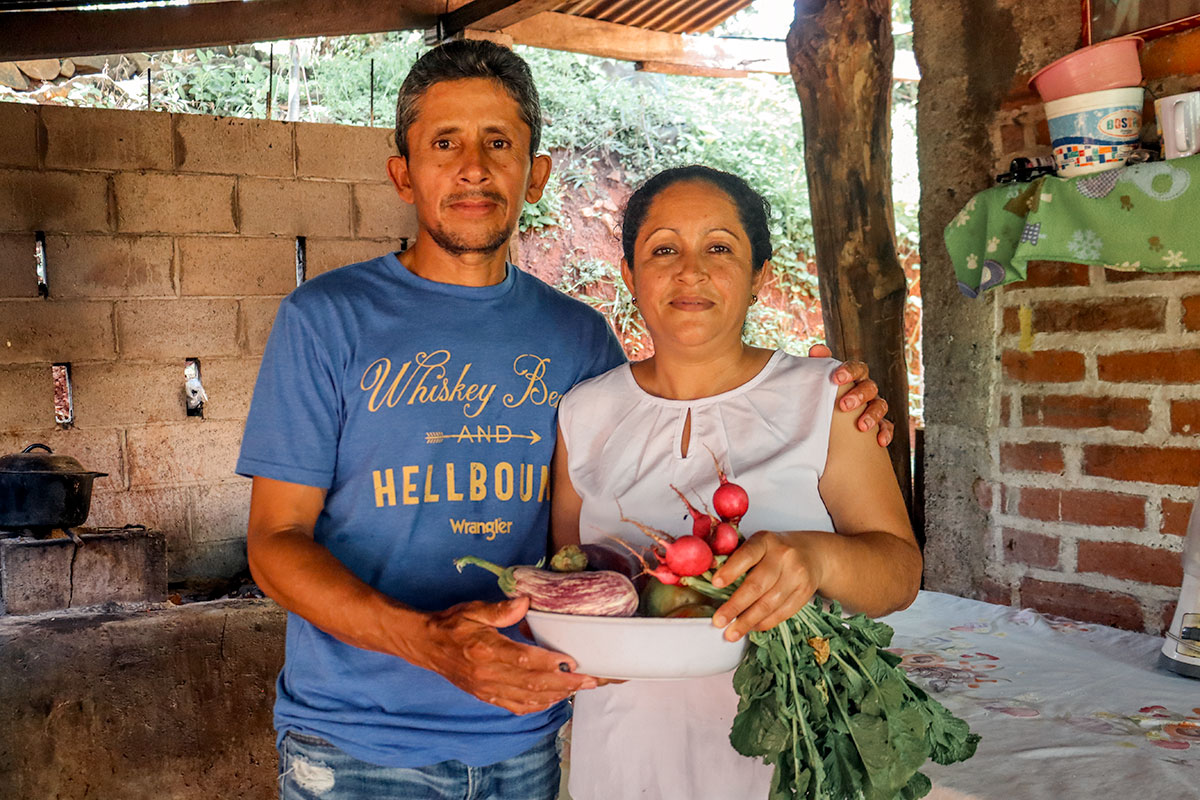
María Noris and husband Moris have participated for six months in Unbound’s agricultural school in Santa Ana, El Salvador, where they’ve learned how to cultivate a home garden to supply them with their daily food.
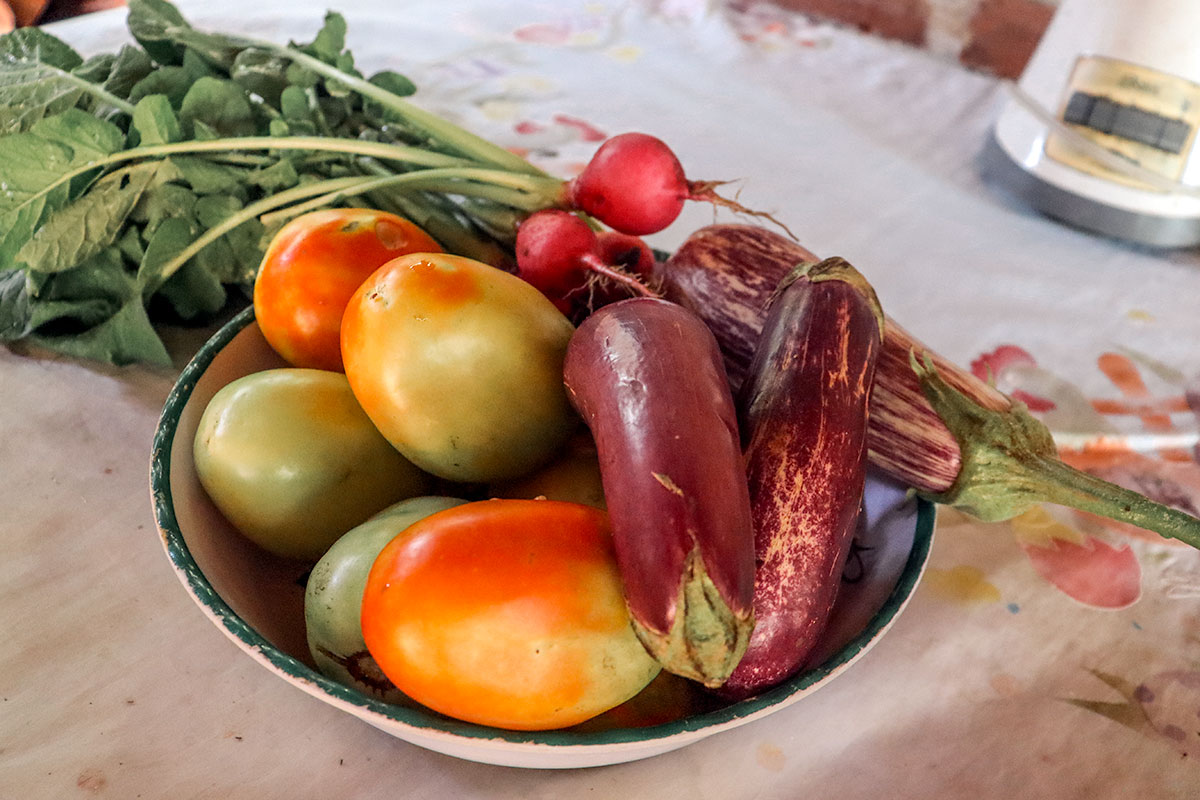
Vegetables from the family’s home garden are helping to keep the family fed during times of drought this season.
Unbound Regional Reporter in Latin America Oscar Tuch and staff in El Salvador contributed information and photos for this story.