Natural disasters are part of life in the Philippines, with typhoons and tropical storms frequently causing severe flooding.
But for Rowena, a mother in Unbound’s Quezon program, it was the gentlest of rain showers that regularly brought her distress.
The aging roof of her one-room home leaked, soaking the space where her four children slept.
For 13 years, the family’s solution was to catch the rainwater in empty containers. With finances barely able to cover food and the children’s educations, they thought they had no choice but to live with the issue.
“I always tell my children to [value] their education because it’s the only treasure that I can provide for them,” Rowena said. “[But] it was painful for me to see that they were suffering when it rained because of our old roof.”
In 2022, the family took Unbound’s Goal Orientation powered by Poverty Stoplight survey and were encouraged to create a plan for overcoming obstacles created by poverty. At the forefront of Rowena’s mind was her children’s futures.
She knew they needed a better home — a safe, dry place where they could focus on their studies in comfort — and she committed to reaching a goal that she had once believed to be impossible.
December 03, 2025 | Poverty Stoplight
When green is the color of safety
A family improves their safety and security with Poverty Stoplight
By Kati Burns Mallows
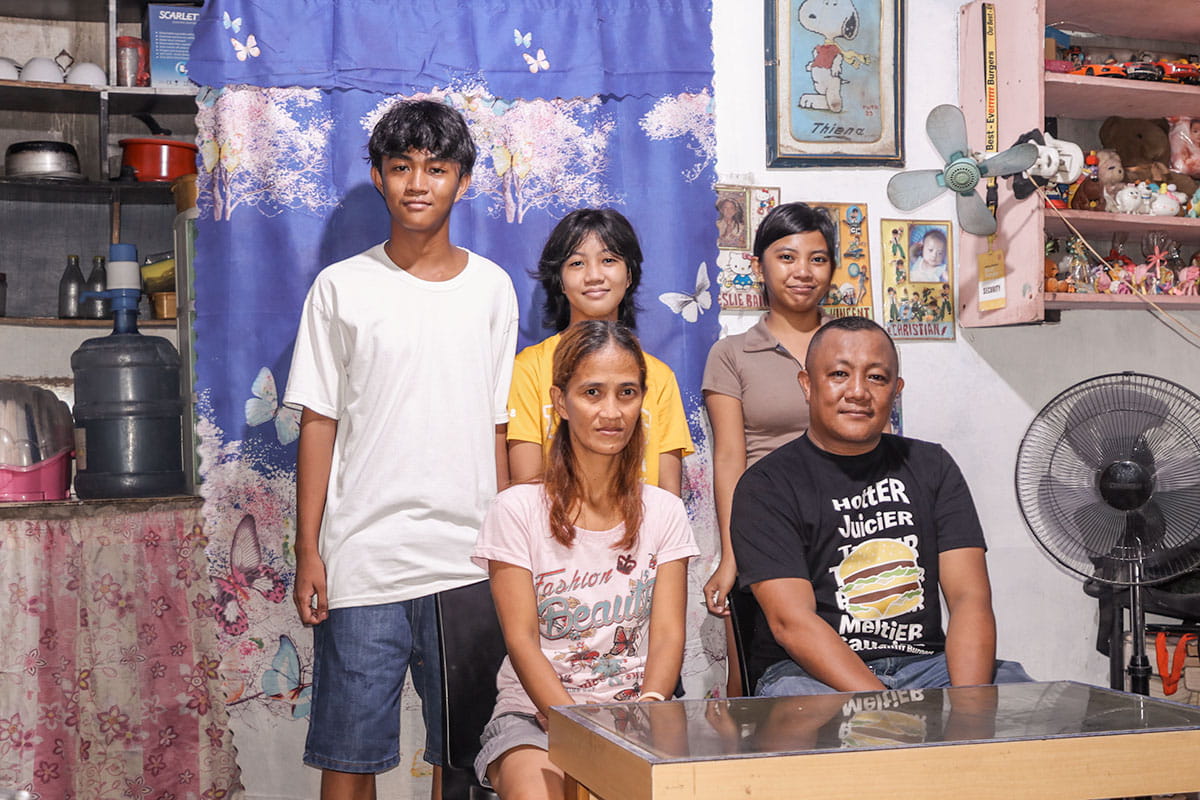
Rowena (seated) with her husband, Edsel, and three of their children at their home in Quezon, in the Philippines. Standing left to right are sponsored youth Christian, 15, Leslie Rain, 20, and Eden, 11.
It was painful for me to see that [my children] were suffering when it rained because of our old roof.
— Rowena, Mother of Unbound sponsored youth Christian in Quezon, Philippines
A 'vulnerable country'
Rowena’s family’s lives have been molded by natural disasters.
The family’s one-level home was flooded during a typhoon. With help from the Unbound Critical Needs Fund, they replaced their food and other damaged necessities while cleaning up their home after the knee-deep, muddy floodwaters receded.
But, in a country that sees about 20 tropical storms annually, it likely won’t be the last time Rowena’s family faces such a dire setback. In 2025 alone, there have already been 21 typhoons, with two catastrophic typhoons impacting over 3,200 families in Unbound’s programs in the Philippines.
In 2024, the World Risk Index ranked the Philippines as the country most at risk for natural disasters. With over 17.5 million Filipinos living below the poverty line, the majority lack the resources to prepare for or recover from the devastation caused by natural disasters like loss of shelter or livelihood.
Despite their home offering little defense against the elements, home improvements didn’t reach the top of Rowena’s priority list until the Poverty Stoplight survey helped her see just how much it was influencing her family’s ability to overcome poverty.
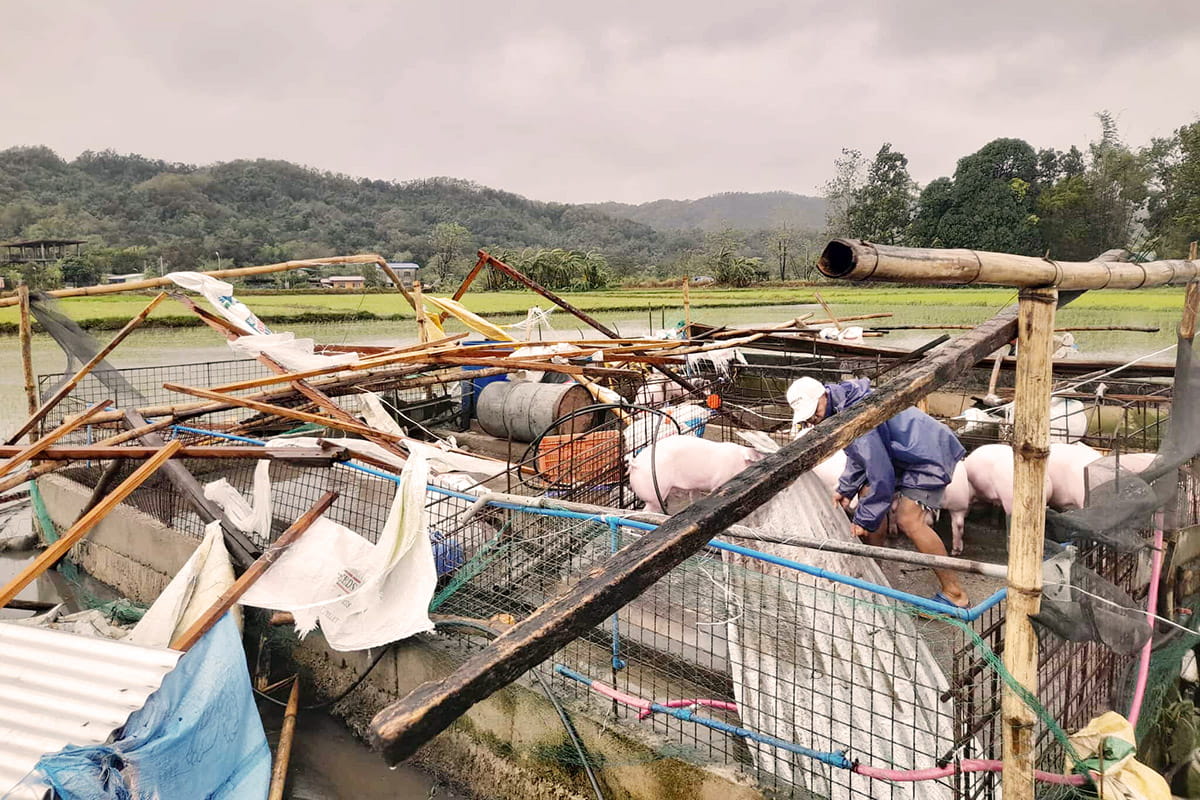
In early November, Super Typhoon Uwan destroyed homes and livelihoods in Quezon in the Philippines, impacting over 180 families served by Unbound.
Improving safety with Poverty Stoplight and the Critical Needs Fund
Poverty Stoplight is a mobile technology and social innovation tool — created by nonprofit Fundación Paraguaya — that helps families to clearly see their strengths and needs and to set goals for overcoming poverty.
In Unbound’s Quezon program, Rowena was guided through 54 poverty indicator images and questions organized under themes, and she marked each with a color she believed fit her family’s life reality — red to indicate extreme poverty, yellow to indicate poverty and green to indicate no poverty. Rowena’s survey results indicated her family was experiencing the most poverty under the theme “housing and infrastructure.”
Income from Rowena’s small convenience store and her husband Edsel’s job as a security officer were not enough to help the family begin their home improvements.
But Rowena was determined to find a way. She analyzed their needs and prioritized their goals, important skills she learned from the Unbound Quezon staff. Maria Salamanque, an Unbound Quezon social worker, said the staff guides families to be self-sufficient and to make decisions on their own.
“They know their needs,” Salamanque said. “By [entrusting them] to make the decisions, they become more empowered. We just provide them with knowledge and training — they are the ones who work at applying [the lessons] to their lives.”
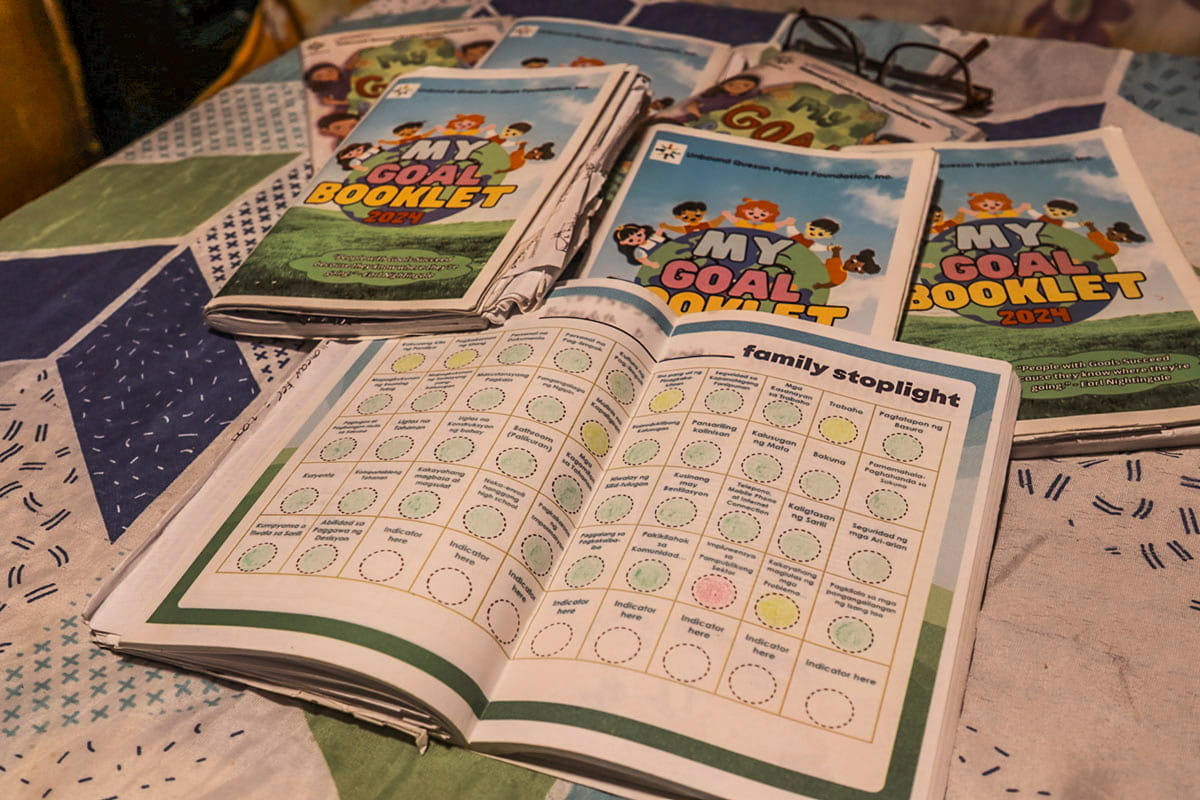
Over the last three years, families in Unbound’s Quezon program have moved 36,930 poverty indicators out of either red (extreme poverty) or yellow (poverty) statuses and into the green (no poverty) status using Poverty Stoplight. The ‘My Goal Booklet’ helps them keep track of their goals and progress from year to year.
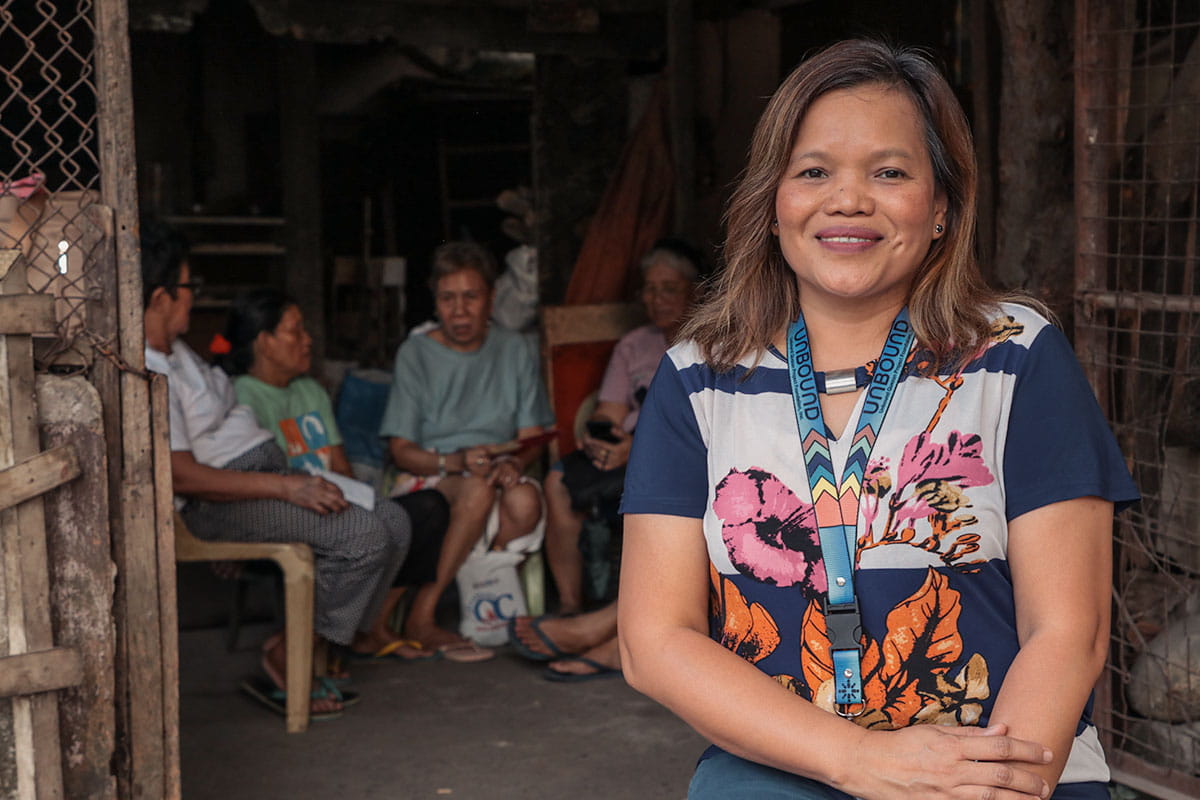
Unbound Quezon social worker Maria Salamanque and other staff work one-on-one with families each year to guide them through the Poverty Stoplight survey.
Rowena requested and received $268 from the Unbound Critical Needs Fund, a resource that families in the program can decide to utilize in certain situations to support them in their goals. The family combined the funds with a loan from Edsel’s workplace and capital from Rowena’s small store to jumpstart their renovations.
“Improving a house needs to have a big budget,” Rowena said. “But that would make our living better and more comfortable, so we did what we had to do.”
Over the course of a year, with friends to help with the construction, Rowena’s family moved most of their red and yellow poverty indicators under “housing and infrastructure” to green.
They expanded their home to a second level, adding three bedrooms. Before, the family’s kitchen, living room and bedroom were in one space on the first floor, and the children slept together on floormats. Adding a second level not only gave the children their own sleeping space but also ensured the family’s safety during floods.
In addition, the family replaced their old, leaky roof and updated the window of the home from bamboo to concrete and glass.
“It may not be beautiful … but our house now is better than what it was before,” Rowena said. “We can sleep restfully at night not worrying about leaks from our roof or the flooding. Our security and safety have improved.”
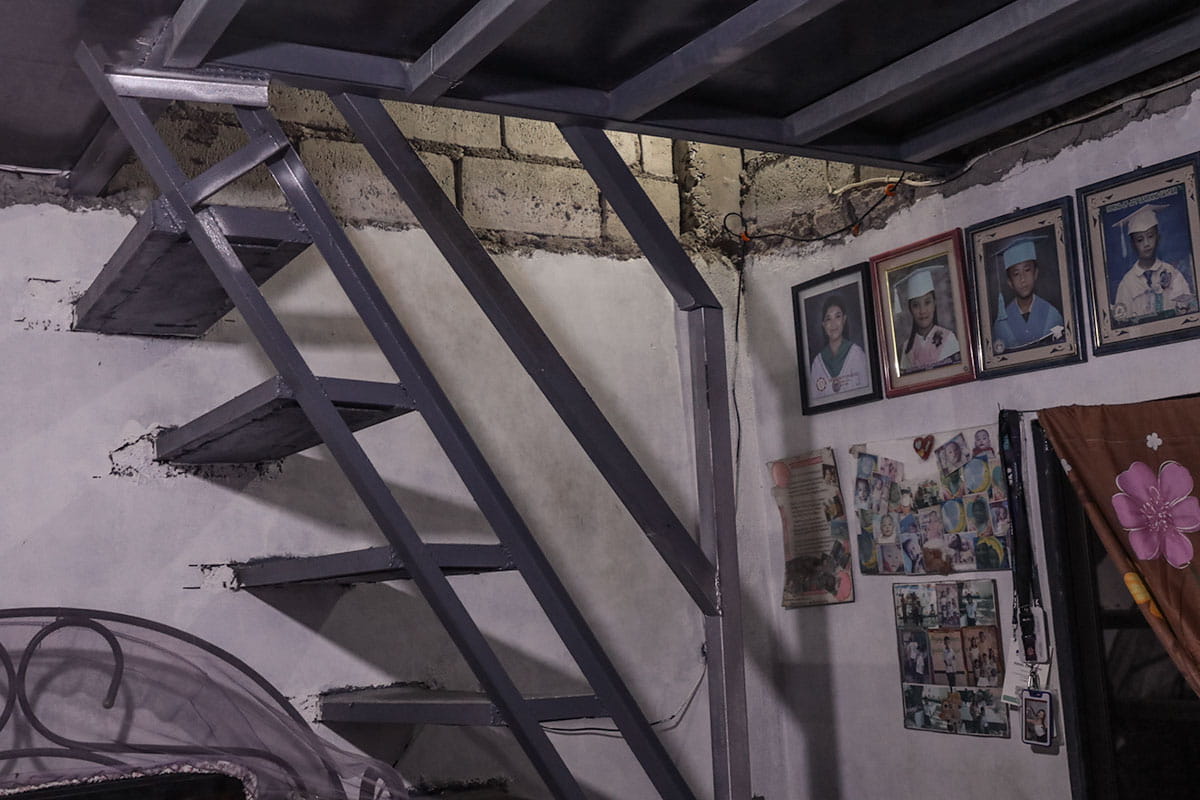
The concrete and iron stairs Rowena’s family installed lead up to the new second level of their home.
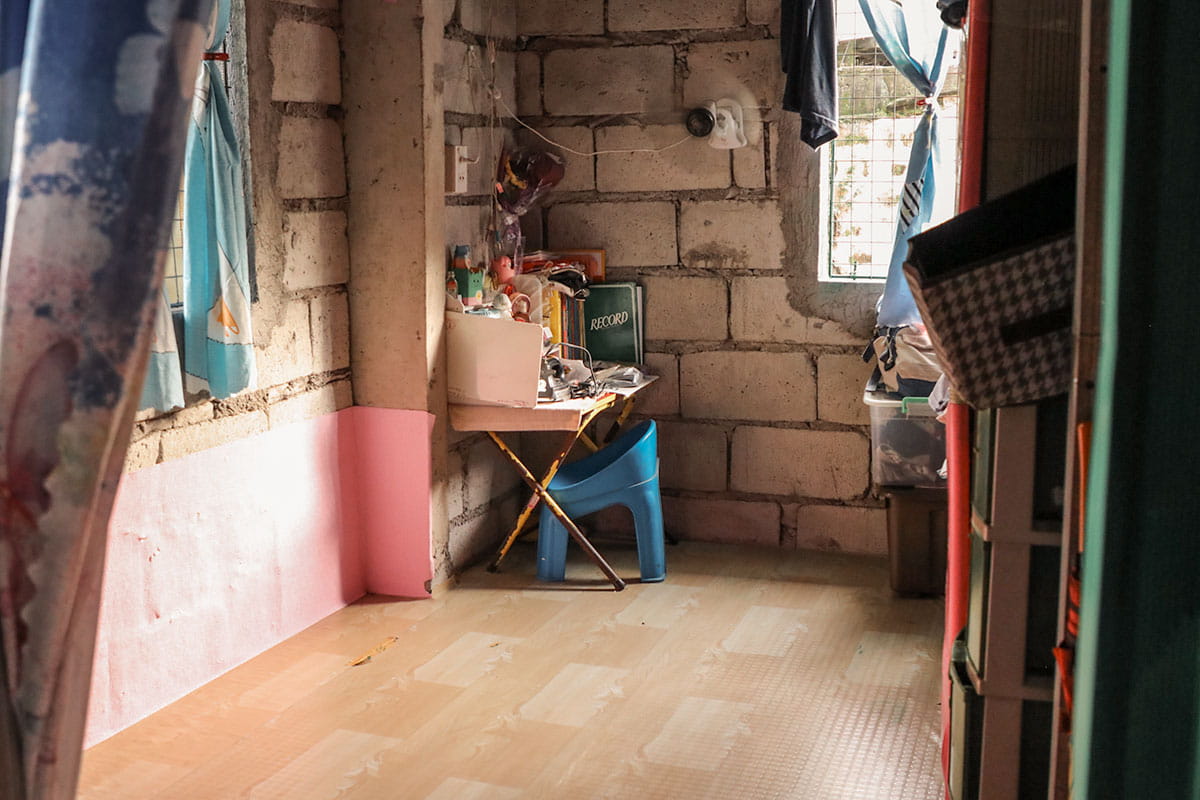
Now with their own bedroom on the second level, Rowena’s growing children have more space, and the family overall can be safer during times of flooding.
A future in green
Though the Philippines may always be a country caught in the “eye of the storm,” Rowena has cause to feel less stressed over her family’s safety and living situation these days. She can now set her focus on other goals — such as increasing her income and ensuring her children get the best education possible.
The family would like to make further improvements to their home, such as re-enforcing the walls and tiling the floors. But for now, the family is satisfied with the improvements.
“Unbound is the bridge to uplift our lives from poverty,” Rowena said. “I am very happy to see that we are moving forward for the betterment of our living. I can see the happiness in my children at having their own bedroom.”
When Rowena takes her follow-up Poverty Stoplight survey, she plans to set goals to increase the family income by working to expand her small convenience store. In her mind, there’s only one outcome that will be acceptable.
Determinedly she said, “That will be my “green” goal for the year.”
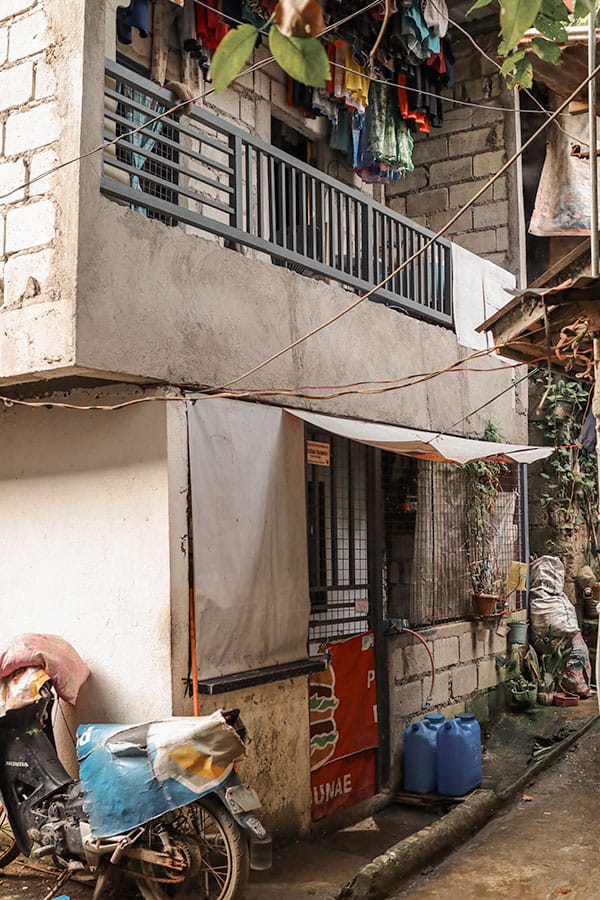
Rowena’s family’s home in Quezon following the addition of their second level.
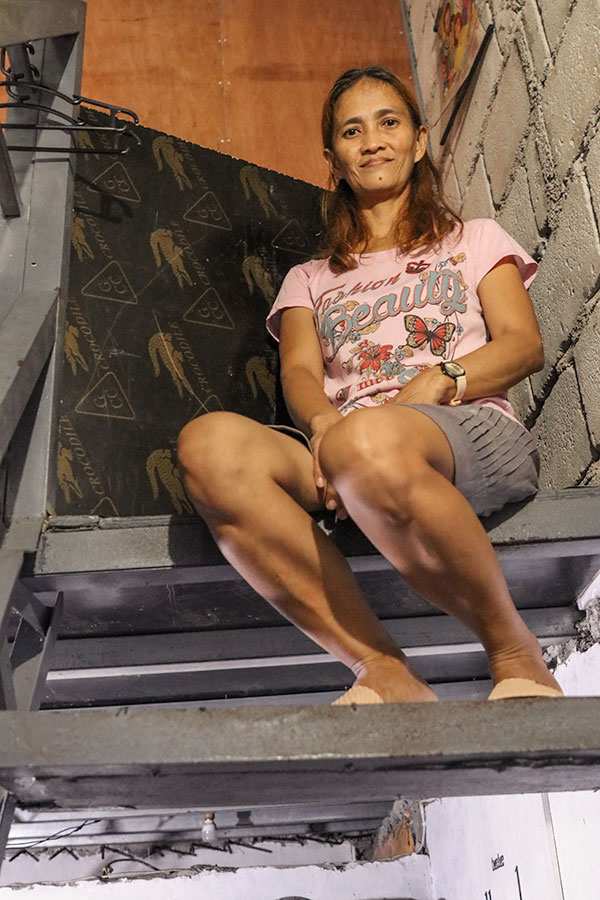
Rowena is determined to work hard to continue achieving her family’s goals so that her children can focus on getting good educations.
Learn more about the impact of Poverty Stoplight on families in Unbound’s programs around the world. See how a mother and son in Guatemala built their first home with guidance from Poverty Stoplight in “Peace in a tiny home.”
Unbound Regional Reporter for Asia Tristan John Cabrera contributed information and photos for this story.