Almost every part of a person’s life — their ability to be healthy, work and learn — is affected by their access to and understanding of basic hygiene.
In the absence of clean water, adequate sanitation and good hygiene habits, people face higher risks of communicable diseases, infections and long-term chronic medical conditions. Illness prevents them from being able to consistently attend work and school and engage in their communities while increasing health care spending.
Poor health can prolong the cycle of poverty.
Determined to break that cycle, a mothers group and educators in Manila, Philippines, partnered on two occasions to implement an Unbound Agents of Change initiative that would improve handwashing hygiene for children at an elementary school.
March 12, 2026 | Agents of Change
Clean hands, healthy kids
Two Agents of Change initiatives lead to improved handwashing hygiene and awareness for schoolchildren in Manila
By Kati Burns Mallows
Safe wash in schools essential for child health and learning
In a community in Cavite City in Manila, Mary Ann raised three children, and her greatest source of strength and joy came from “watching them grow into their dreams.”
Her youngest, now 19, is realizing his dream of a college education with the help of Unbound sponsorship, support that has meant the world to Mary Ann as a solo parent with an informal job.
For 11 years, Mary Ann has been a parent leader in her Unbound mothers group, guiding and supporting more than 30 sponsored families, most of whom have children attending Mabolo Elementary School.
In 2021, when the group proposed an Unbound Agents of Change initiative to repair one of the school’s handwashing facilities that had become unusable, their choice was personal — the health and safety of their children was at stake.
“We believe this was the school’s most urgent need, as it directly supports the health and hygiene of the children in our community, as well as the teachers and administrative staff,” Mary Ann said about why the mothers proposed this initiative.
According to UNICEF Philippines, studies have shown that handwashing can reduce diarrheal diseases by 30% and acute respiratory infections by up to 20%.
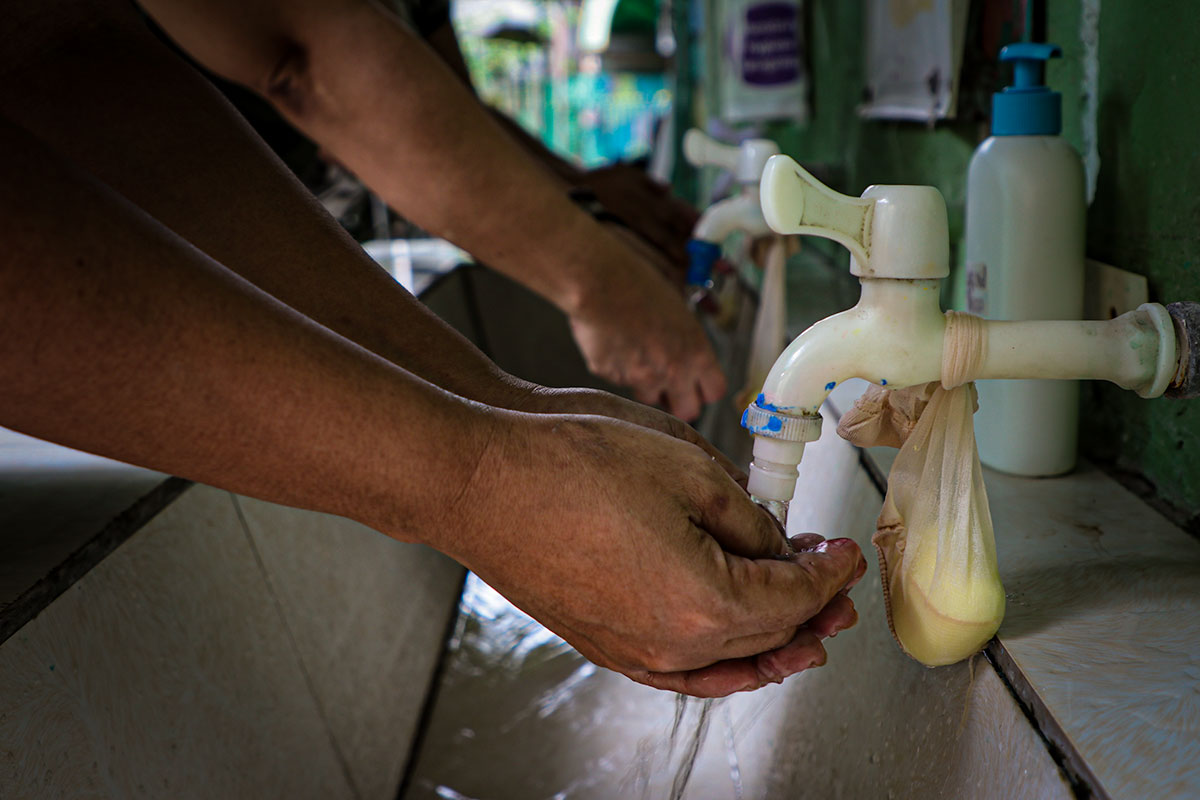
With students spending a significant portion of their days at school, a lack of proper water, sanitation and hygiene can impact learning, health and their sense of dignity.
However, the Centers for Disease Control and Prevention reported in 2025 that 670 million people globally still do not have access to a handwashing facility, and 462 million children do not have access to one at school. In the Philippines, about two-thirds of the poorest Filipinos still lack access to basic hygiene facilities.
Research conducted in 2024 by the Philippines Institute for Development Studies (PIDS) and UNICEF noted that despite progress in improving water, sanitation and hygiene services (called WASH) in the Philippines, waterborne diseases remain a leading cause of death and hospitalization, particularly among those living in poverty.
The inclusion of WASH-related indicators under goals 4 (Education) and 6 (Water and Sanitation) of the United Nations 17 Sustainable Development Goals (SDGs), represents the importance of universal WASH access. Not long after the SDGs were formally adopted in 2015, the Philippines Department of Education created the Wash in Schools Policy (WinS) to help “address the gaps in the areas of hygiene and sanitation and to keep more children healthy and in school.”
Over 90% of public schools in the Philippines now include WinS programming as part of their school improvement plans, dedicating funding for soap, cleaning materials, and repairs and maintenance. According to PIDS, over time, WinS program schools have proven to have safer, cleaner water facilities, and better student hygiene knowledge and behaviors.
Mabolo Elementary School in Manila is a participating WinS school, serving over 560 learners from kindergarten through 6th grade. With a rather large campus, Mabolo had four handwashing stations in key locations, but two of those stations needed repairs.
Unfortunately, the school lacked the financial resources for the updates, creating a barrier to improved sanitation.
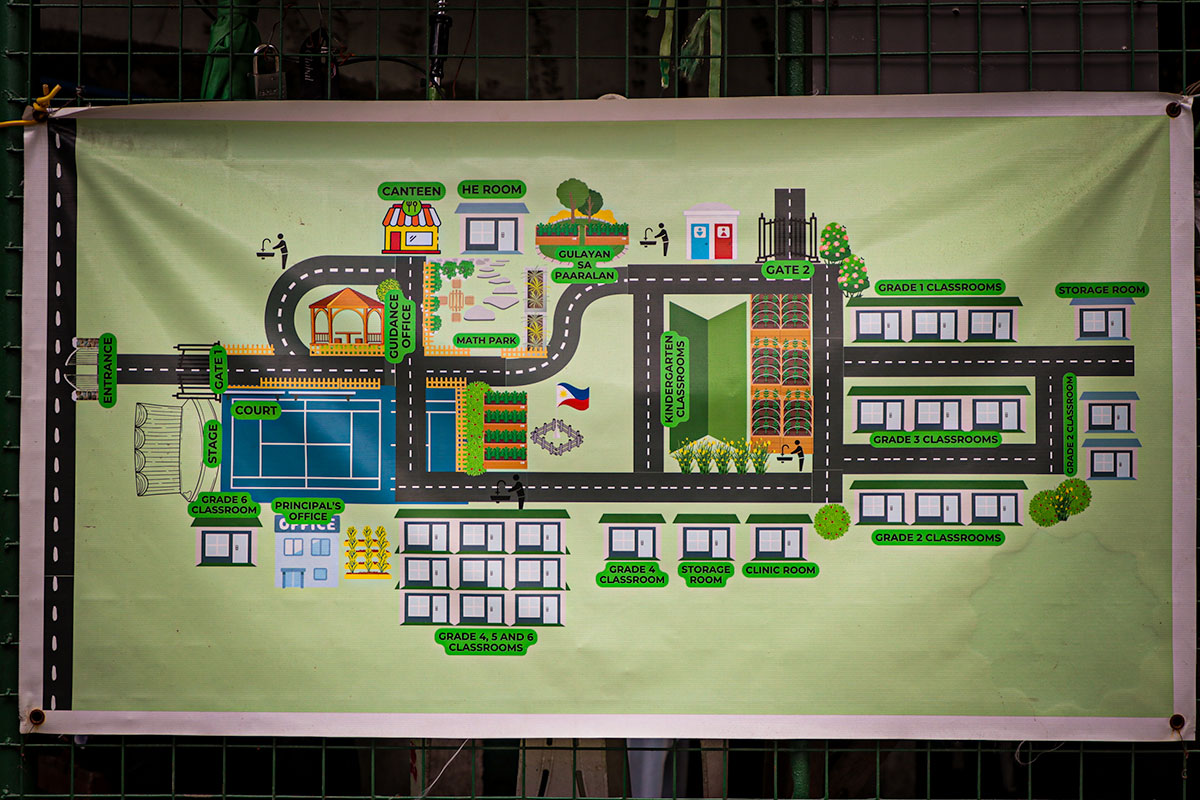
Mabolo Elementary School in Manila serves almost 600 students, offering four handwashing stations in strategic areas throughout the campus.
Agents of Change initiative helps improve school hygiene and awareness
Long wait times and overcrowding at Mabolo Elementary School’s remaining handwashing stations discouraged consistent hand hygiene, which contributed to the spread of illnesses and children being absent from school.
In 2021, Mary Ann and her mothers group sought to replace one handwashing station that was inoperable.
“The pipes were broken, and water would no longer come out of the faucets,” Mary Ann said. “It had no roof, which kept the area dirty.”
Unbound’s Agents of Change is one platform that mothers groups use to drive change in their communities. They identify a need, craft a proposal for aid, and then use the grant funding they’re awarded to implement the change. Donors with an interest in funding small-scale community progress can select Agents of Change proposals from the organization’s website.
Unbound measures the impact of its work under five strategic pillars, which contribute to more than 10 of the SDGs. Mothers groups and Agents of Change support Unbound’s “Build Community” pillar. Under this pillar, Unbound seeks to provide at least $8 million in funding for participants to implement community development initiatives benefiting an estimated 4 million people globally by 2030.
From 2024 through 2025, over 30,900 families living in poverty around the world benefited from hygiene initiatives implemented through Unbound Agents of Change in their communities.
Using a grant of $446 and in just one week, the mothers, in collaboration with the Mabolo school administration, purchased materials and vetted and hired skilled laborers to construct the new handwashing station.
“The teachers and principal expressed their happiness and gratitude,” Mary Ann said. “Even the parents showed their deep appreciation for the project.”
Mabolo school administration is responsible for maintaining the handwashing stations, ensuring they’re clean and that sufficient soap and water are available.
Since the station was completed four years ago, Dr. Welmina D. Akol, principal of Mabolo Elementary, said handwashing has become part of the students’ daily routine on campus.
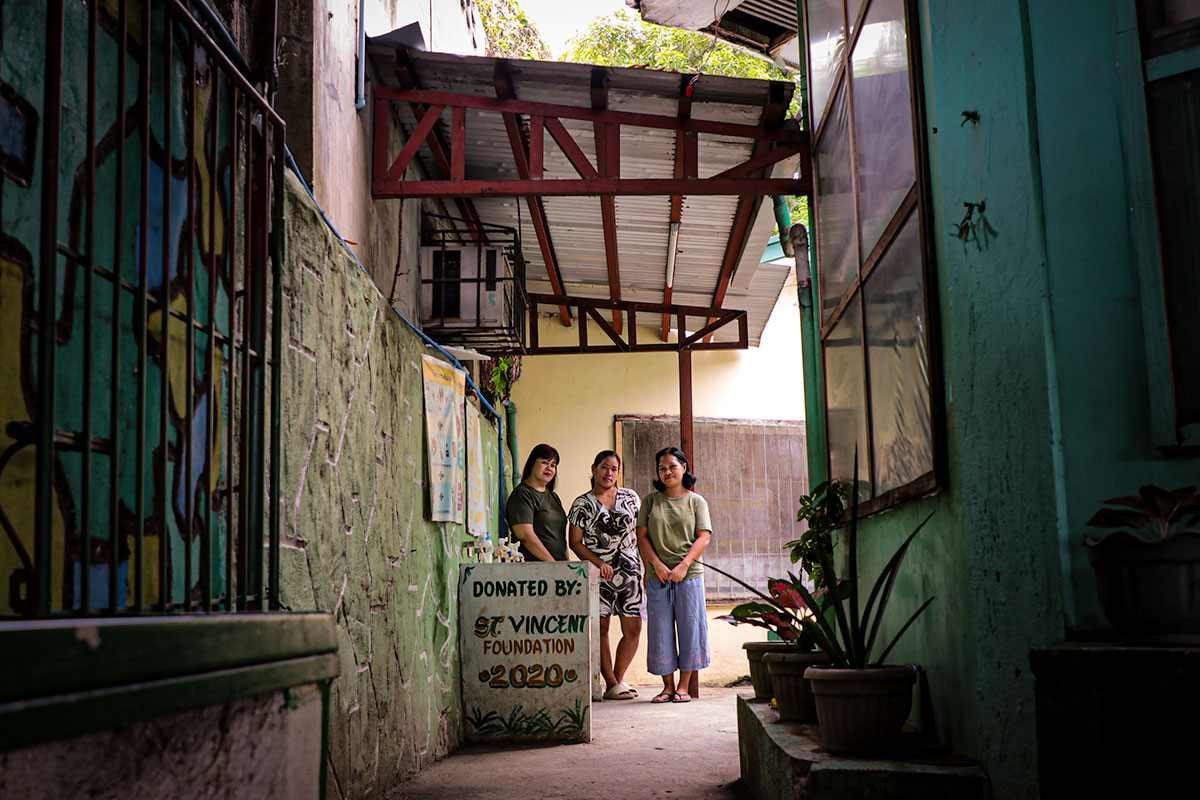
From left to right, Mary Ann, Ronalyn and Analiza were part of the Unbound mothers group that spearheaded the first Agents of Change initiative to update the handwashing stations at their children’s school in 2021. They’re standing beneath the handwashing station’s roof, which was added as part of their first initiative.
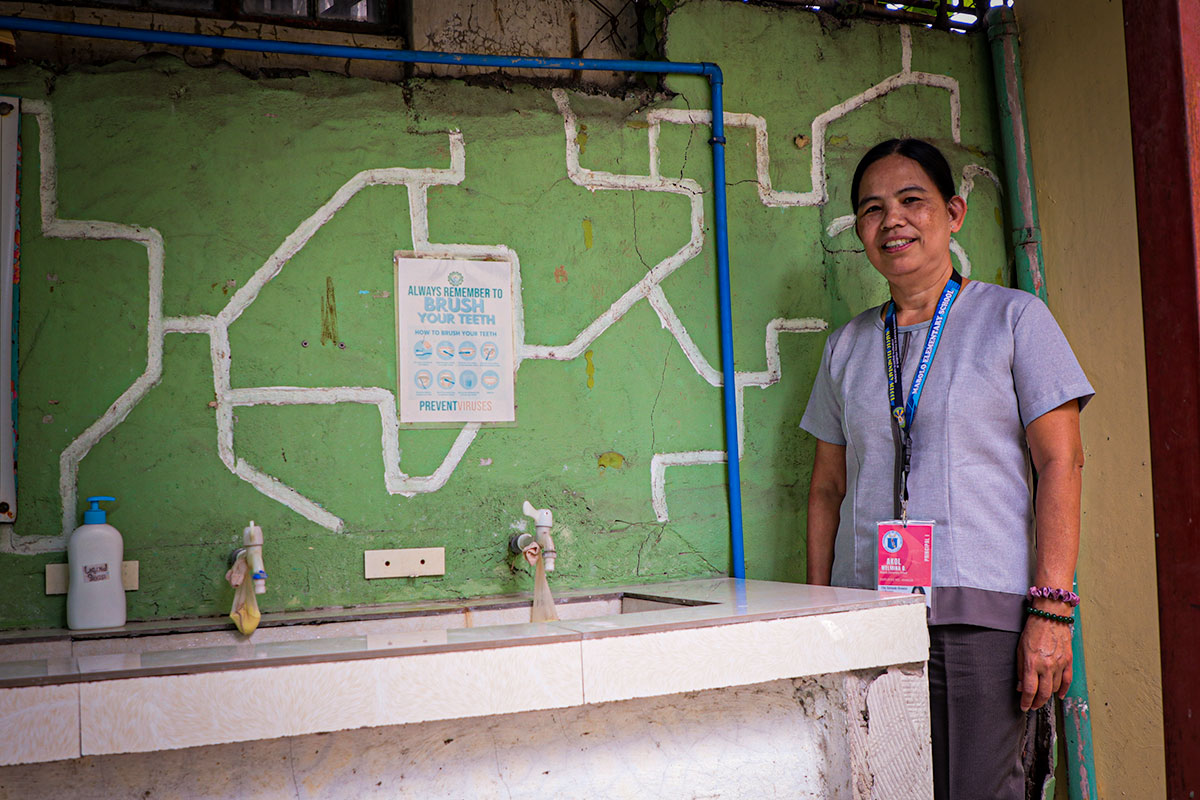
Dr. Welmina Akol, principal of Mabolo Elementary, worked closely with the Unbound mothers group to see the Agents of Change initiative to completion.
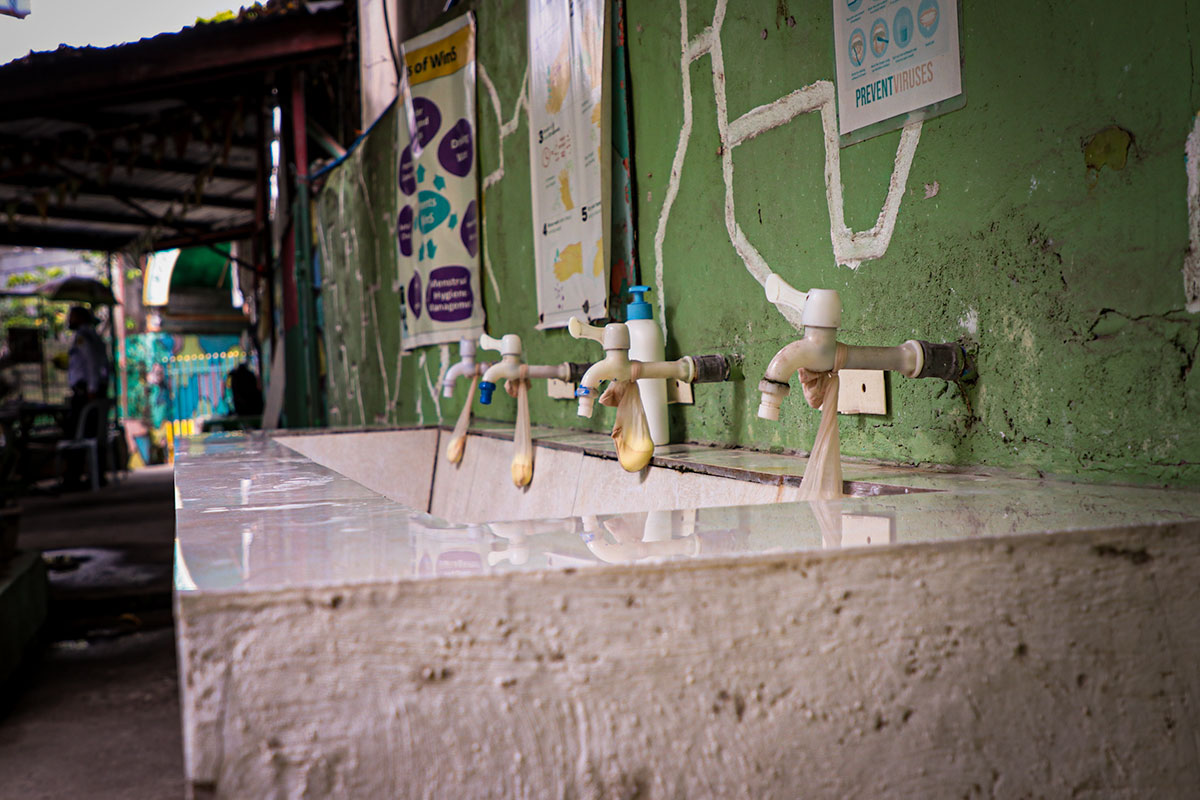
Through the Agents of Change initiative, Mary Ann and her mothers group led an overhaul of the existing handwashing station in 2021, adding new pipes, faucets, tile and a roof, among other things.
The handwashing area is a vital part of the school’s facilities, helping learners maintain cleanliness and stay healthy. We are grateful to Unbound for making this project possible and for being strong advocates of good hygiene among students.
— Dr. Welmina D. Akol, Principal, Mabolo Elementary School, Philippines
Akol said the school has experienced fewer cases of illness, such as coughs, colds and diarrhea, and improved attendance among students. In addition, the station has encouraged the development of a cleaner, more disciplined culture of hygiene and a safer environment in times of seasonal outbreaks.
“The handwashing area is a vital part of the school’s facilities, helping learners maintain cleanliness and stay healthy,” Akol said. “We are grateful to Unbound for making this project possible and for being strong advocates of good hygiene among students.”
The long-term benefits of the initiative were so pronounced that the school administration approached Mary Ann and the mothers a second time to make improvements to another handwashing station. In late 2025, with a $575 Agents of Change grant, the mothers renovated a second station — cleaning the area, adding an additional three faucets and building a roof.
Mabolo Elementary School now has four functioning handwashing stations. But students, teachers and administrators aren’t the only ones benefiting. Mary Ann has noted parents and the greater community do as well.
Because water access is not available or sometimes disrupted for many households in the community, some residents gather water from the nearby handwashing stations.
“The handwashing stations provide a reliable water supply and, during mealtimes, some parents make use of the area,” Mary Ann said. “Unbound has not only extended help for sponsored members and families but has also created meaningful change for the wider community.”
Akol said the lasting impact of the initiatives is that they will continue to improve awareness about cleanliness and health for generations of learners to come.
“The mothers and the initiative became a strong partner of the school in strengthening the implementation of our WinS Program,” Akol said. “We will strive to repay that kindness by taking good care of these [stations].”
Because, as Akol said, “clean hands promote good health, and good health fosters a healthy mind.”
Unbound Agents of Change grants improve roads, schools, water access, health care and more for communities throughout three regions of the world. Learn more about Agents of Change and how you can fund an initiative that aligns with your interests today.
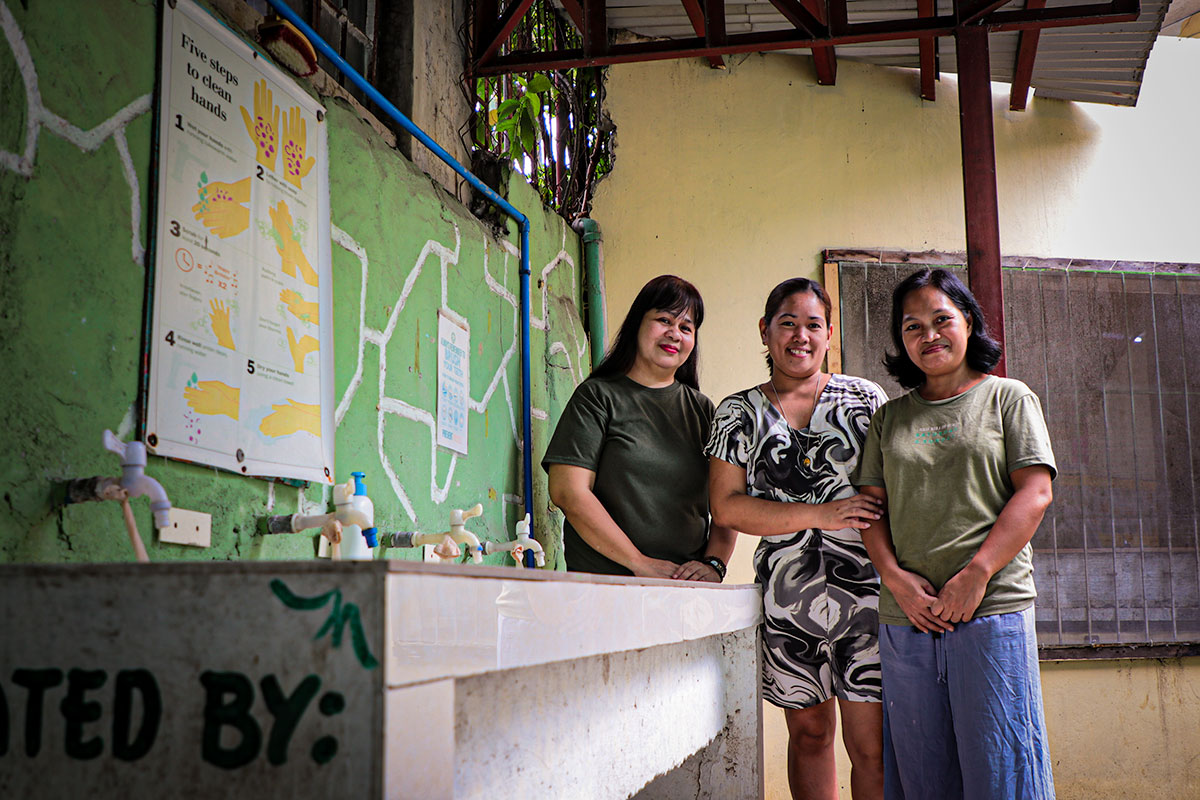
Pictured left to right, Mary Ann, Ronalyn and Analiza, the mothers of sponsored children from Unbound’s Manila Program in the Philippines.
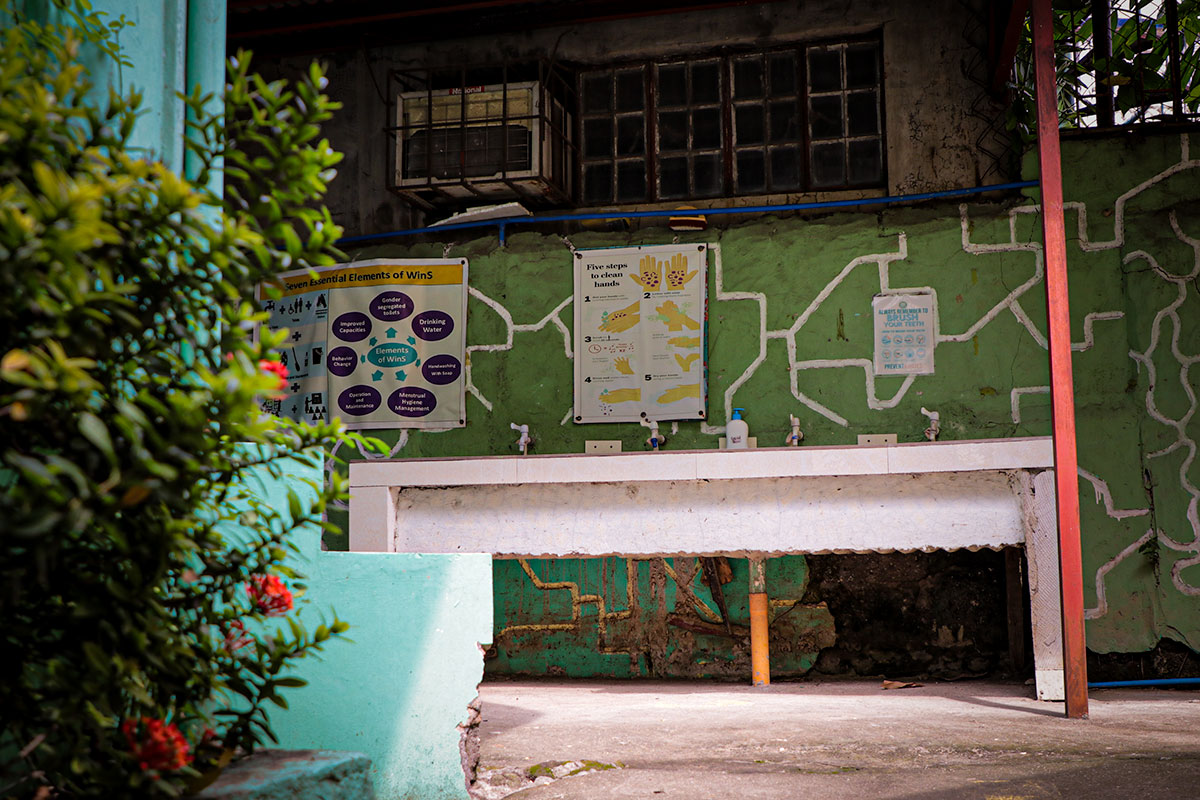
The handwashing station completed with an Agents of Change grant at Mabolo Elementary School in 2021.
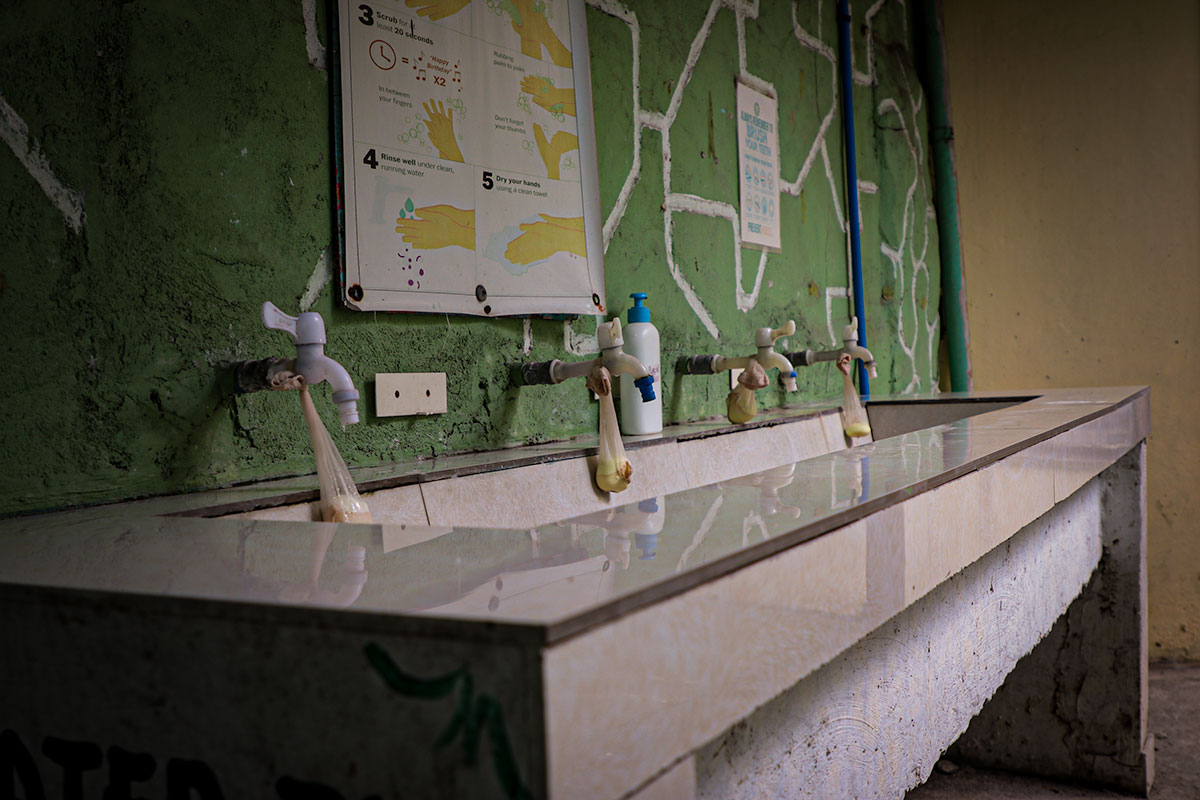
A reliable water source, this handwashing station is also used by parents and others in the community when water is inaccessible in their nearby homes.
Unbound Regional Reporter Tristan John Cabrera contributed information and photos for this story.