Pursuing and achieving success
Since 1981, Unbound has worked alongside individuals, families and communities to end poverty and build a world where every person can reach their full potential. Local and global monitoring and outcomes-focused evaluations validate the personalized approach and effectiveness of our programs. As listeners first, we continuously refine our programs to ensure each family feels empowered to find sustainable solutions for overcoming their unique challenges.
1.07 million
children, youth and elders worldwide have benefited from sponsorship since Unbound began
11,700+
solidarity groups worldwide, largely led by mothers
22,763
small businesses were started or enhanced by families with the support of sponsorship benefits or microloans in 2025
100%
of children and youth have the opportunity to access education once they are sponsored
4,200+
community-driven development initiatives funded through Agents of Change since 2017


The areas of impact we target to eliminate poverty
Pinpointing exactly what causes poverty is complicated. Not only is poverty multidimensional but it looks different for every individual, family and community, limiting everyone’s ability to live with dignity and reach their full potential.
We believe that the best solutions to poverty come from those closest to the problem. Unbound’s expertise at scaling beneficiary-led solutions to poverty makes us unique in the field of international development.
We seek outcomes based on nine program characteristics to drive change in five program pillars that describe Unbound’s impact on our families, communities and the world. We believe this approach moves us closer to our vision of a world where every person can live free of poverty.
Our work today with over 250,000 families across Africa, Asia and Latin America contributes to more than 10 of the United Nation’s Sustainable Development Goals (SDGs).
ORIENTATION
DECISION-MAKING
BUILDING
SELF-SUFFICIENCY
ACCOUNTABILITY AND SUPPORT
OF LEARNING
Nine Program Characteristics
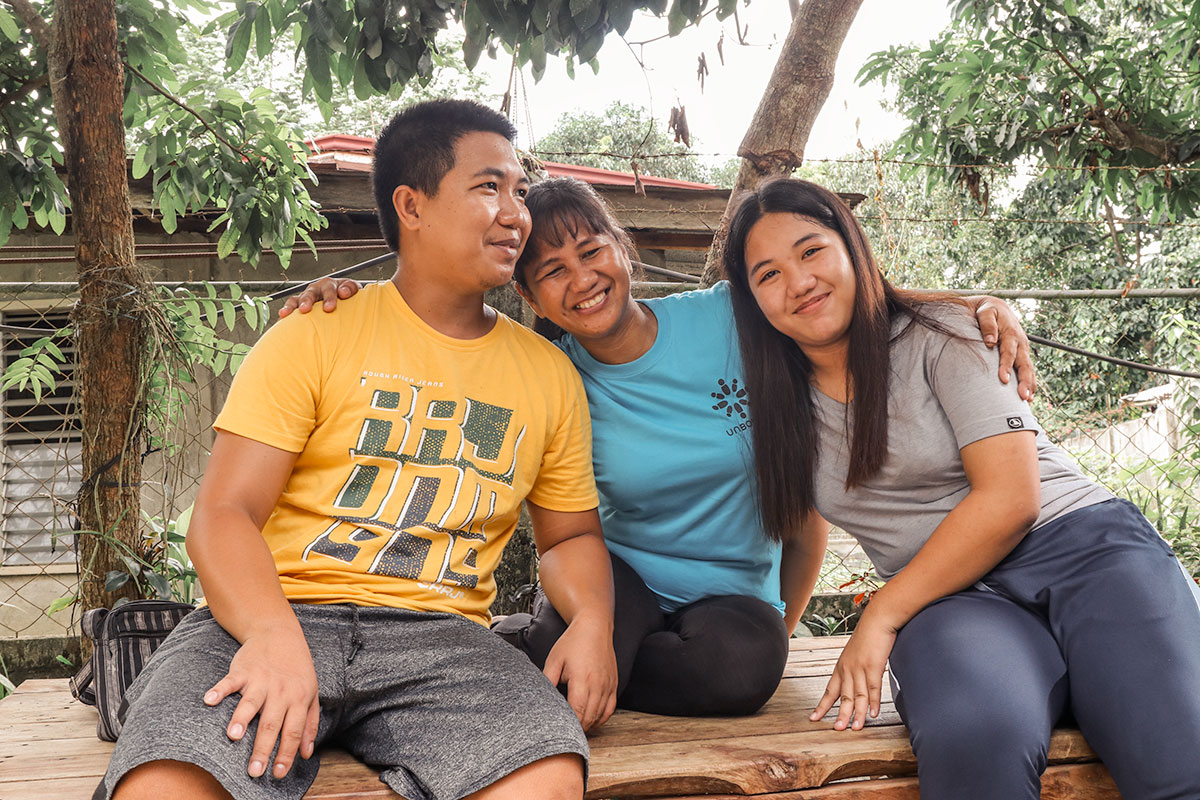
Our nine program characteristics are the fundamental attributes we strive to achieve in partnership with the individuals, families and communities we serve. Recognizing that no single approach to poverty works in all locations, our program characteristics are interdependent and allow our local teams to take personalized approaches that respond to an individual's or family's unique needs.
Our program pillars are embedded within Unbound's nine program characteristics and serve as the primary focus for our global evaluation efforts.
Select a program characteristic to learn more



Nine Program Characteristics
Our nine program characteristics are the fundamental attributes we strive to achieve in partnership with the individuals, families and communities we serve. Recognizing that no single approach to poverty works in all locations, our program characteristics are interdependent and allow our local teams to take personalized approaches that respond to an individual's or family's unique needs.
Our program pillars are embedded within Unbound's nine program characteristics and serve as the primary focus for our global evaluation efforts.
Empowerment
Marginalized groups are empowered to create equality, justice and unity in their communities. Existing power imbalances are addressed with a commitment to non-violence, dignity and long-term change.
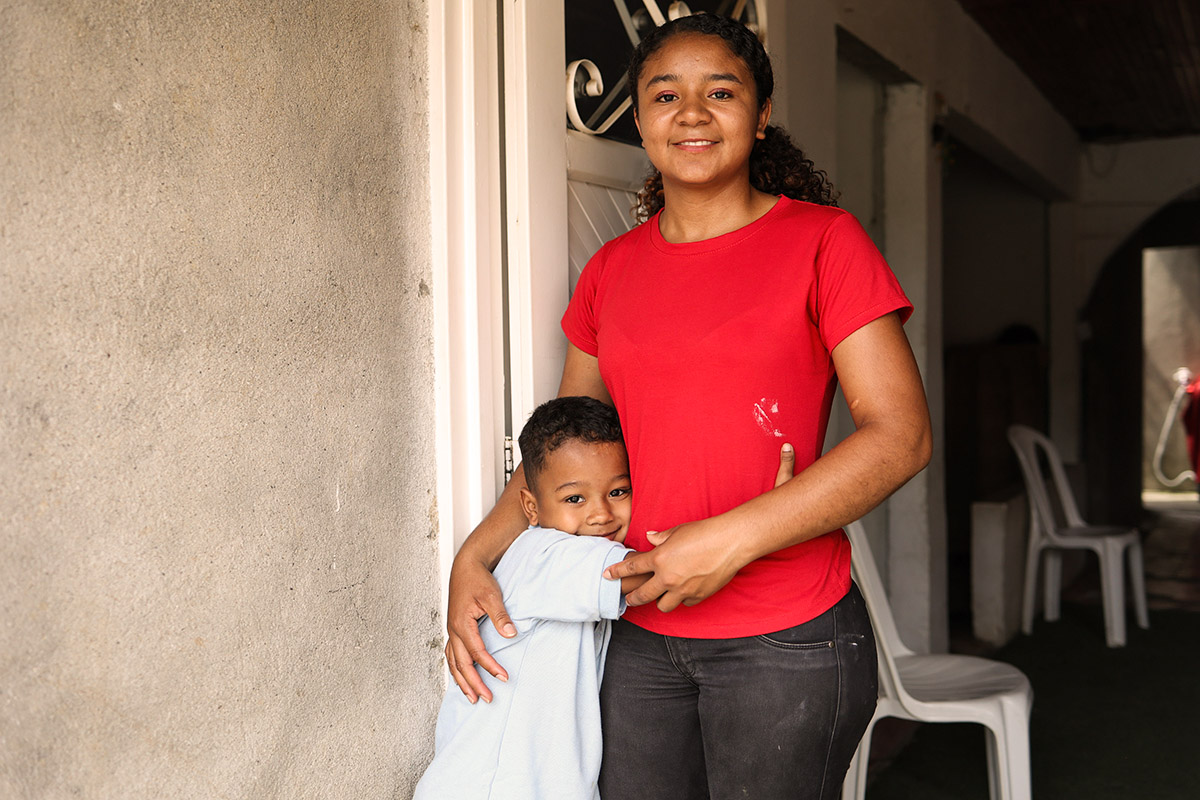
In Colombia, women face many challenges. … Being able to have a space, a place, a moment for us to [be heard], it is as if we are freed.
— Leidy, mother leader on the personal impact of her mothers group
Goal Orientation
Sponsored members and their families have clear personal goals and realistic plans to achieve those goals.
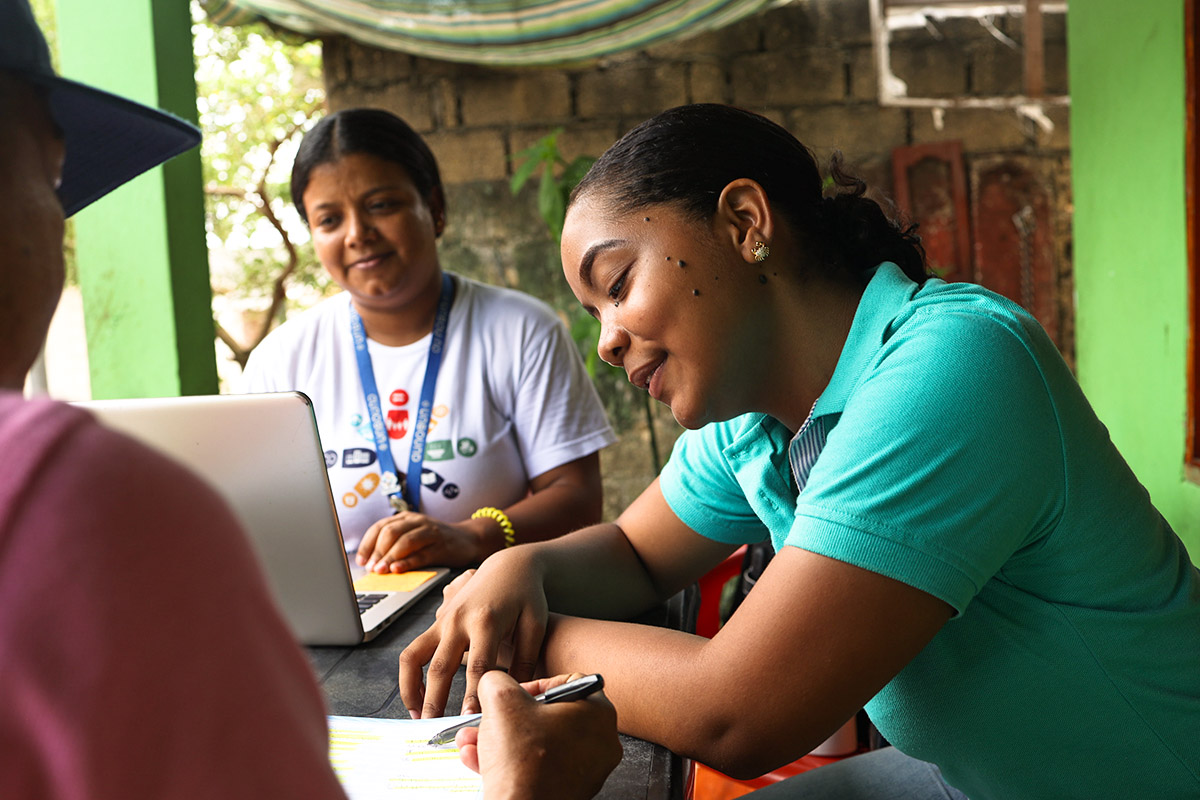
You have a goal — it is your engine, and thanks to it, you can move forward because you want to change the quality of your life.
— Andrea, sponsored youth and Unbound scholarship recipient in Colombia, who completed her college degree
Decentrailized Decison-Making
Sponsored members and their families have the primary voice in selection of personalized benefits and services as well as other key program decisions, within a solid framework of staff support and internal controls.
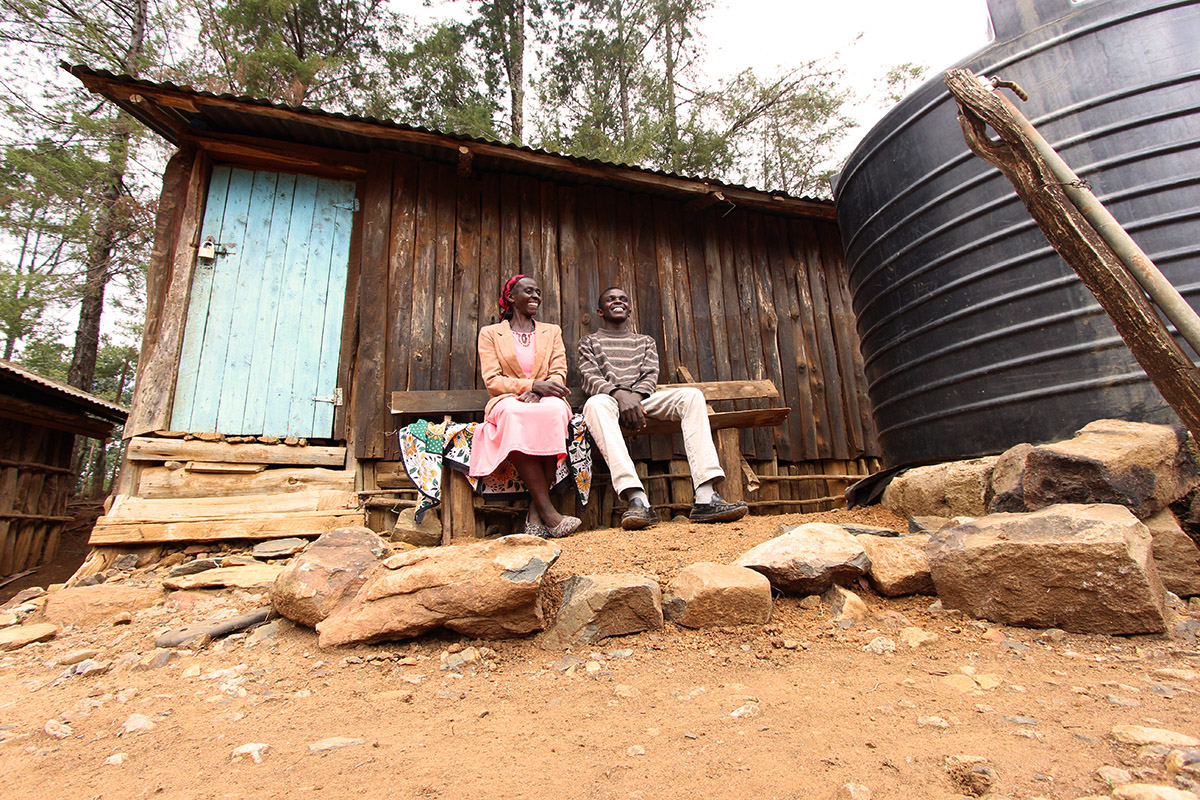
When I receive the funds, I am the manager. I distribute it according to [our needs]. I buy the food. The whole family gets to eat and go to school. That's why I am so grateful.
— Jane, mother of sponsored child Victor in Kenya
Capacity Building
The primary focus of the program is for families to develop their own capacity for personal and economic growth rather than a focus on the distribution of material goods.
I learned to lose fear, to speak up, to achieve my goals and my dreams, to become the person I am today. This year, I graduate in public accounting — I'm going to be a public accountant!
- Yudis, mother leader and Unbound scholarship recipient from Colombia, who didn't get to finish school as a child
Sustainabilty
Sponsored members and families are the primary agents in their development, even self-managing many aspects of the sponsorship program with support from Unbound staff. Ultimately, the community develops programs independent of Unbound.
I applied for a loan from Unbound SACCO [savings and credit cooperative] and [built] our house. We depend on farming; I [bought] goats and a cow. I sell the milk to pay back the loan. We didn't have good bedding, now we do. Nowadays, I have no stress.
- Mary, mother of sponsored youth Joshua in Kenya
Economic Self-Sufficiency
Sponsored members and their families meet their basic needs through a combination of income-generating activities, access to capital and sponsorship benefits. Over time, families rely more on their own initiatives to meet their needs.
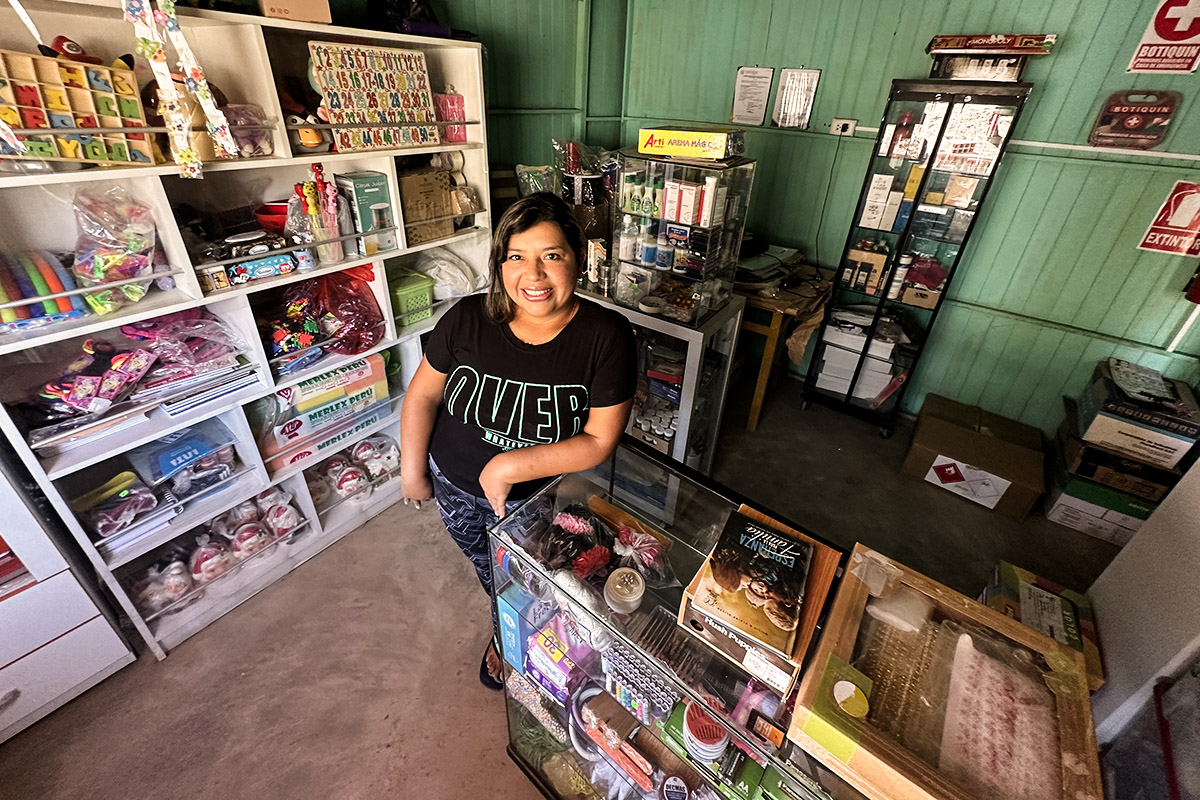
I found the way out of how I was living; [Unbound] opened a door. I dreamed of being independent. I think I am achieving it.
— Emilia, mother of sponsored child in Peru, who used an Unbound small business grant to boost her bookstore
Mutual Accountability and Support
Sponsored members and families form a support network in which they encourage and are accountable to one another.
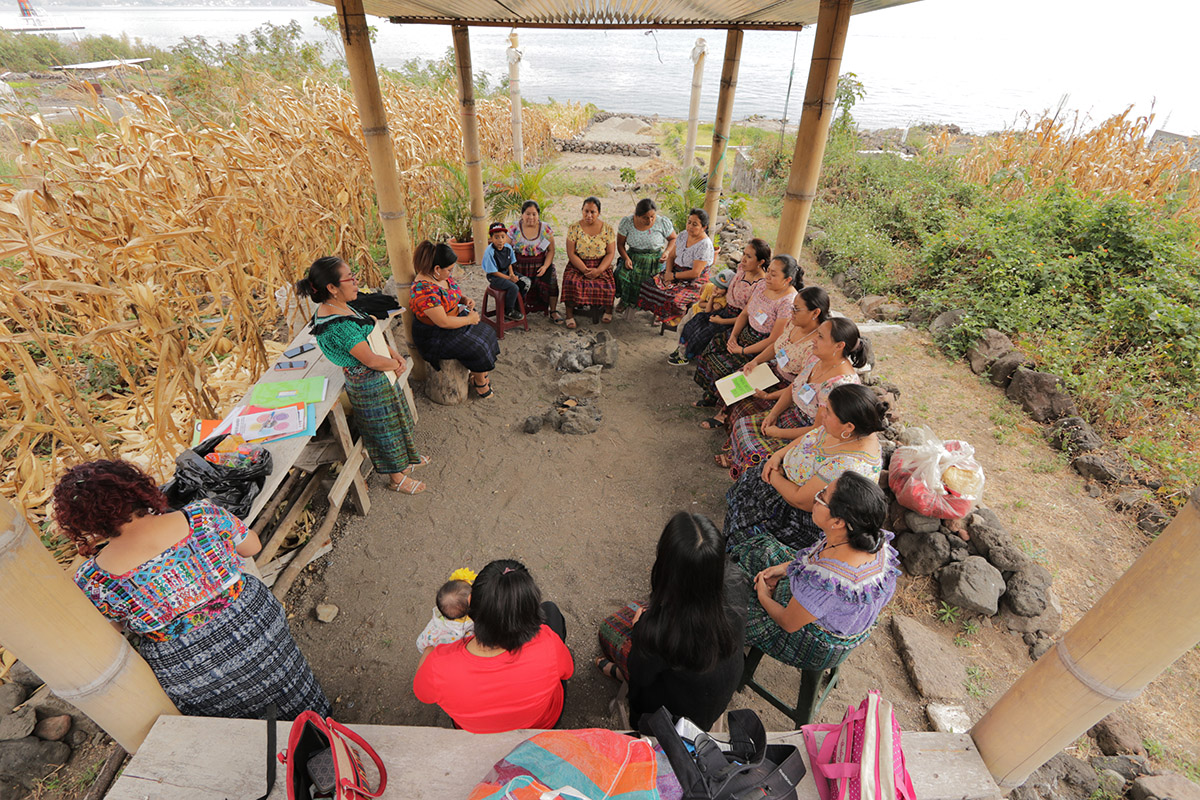
Whenever we say, 'We will do it together,' it is done. [Our group] meetings make us have accountability and help us to know what each are responsible for. We see the problem and we fix it.
— Immaculate, mother leader in Uganda, on how group members keep each other accountable
Worldview
Sponsored members and families are agents of positive change in their communities. They see themselves as part of a worldwide movement with opportunities to share their lives with their sponsors, who they recognize are walking the path with them.
Because of the things we've learned … our lives have improved. We became more disciplined and more cooperative, most especially in the community where we belong.
— Fe, mother leader in the Philippines, on the impact to members of her Unbound small group who worked with their community on an Agents of Change initiative to renovate a playground
Culture of Learning
Sponsored families, together with program staff, balance reflection and action, define and measure outcomes, and utilize results for continuous program improvements.
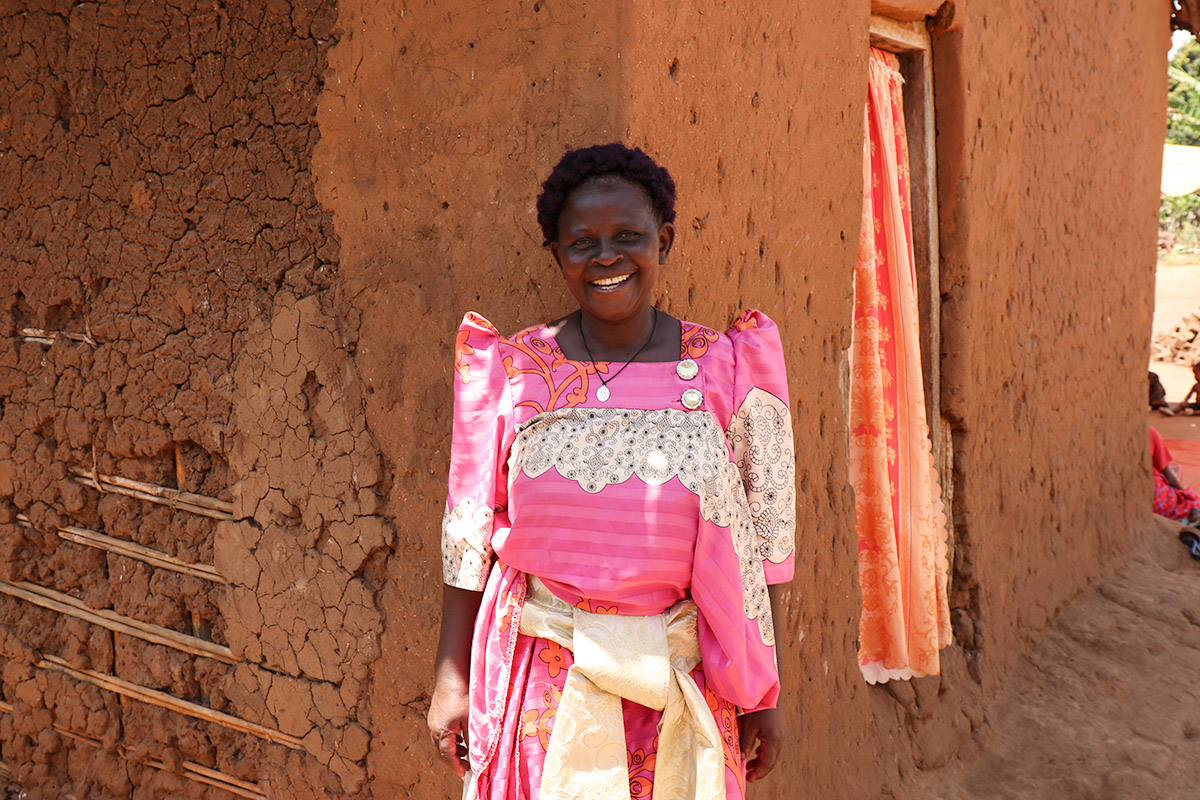
The situation I was living in before, I think even my brain had become frozen. But Unbound taught us how to do [sustainable] farming, they taught us how to save, but most of all, they taught us that we ought to have a purpose. That reawakened my brain.
— Immaculate, mother of sponsored child in Uganda
Five Program Pillars: Results that matter
Our commitment to outcomes-focused evaluation means we look at the results participants experience, not just the outputs of our programs and activities. The impact we drive within our five program pillars helps us achieve our mission and advance many of the UN’s Sustainable Development Goals. Learn more about our specific goals under these five program pillars in our 2030 Strategic Plan: Hope in Every Step.
-
Eliminate Poverty →
We work collaboratively to eliminate multidimensional poverty from the households that we support. As families identify their priorities, Unbound provides the resources and support they need to achieve their goals.
256,530
sponsored individuals and their families, in 2025, accessed opportunities for education, livelihood development and inclusion in community support networks.
98%
of households receive personalized benefits in the form of regular cash transfers made directly to their individual accounts, empowering them to be the decision-makers. The remaining 2% of beneficiaries receive assistance by other means due to lack of access to financial services or other circumstances.
$84.12 million
in direct cash transfers made to sponsored members’ accounts in 2025, providing critical resources for families to chart their paths out of poverty.
185,686
top goals were set and achieved by families in 2025 using Poverty Stoplight as their guide for beginning to eliminate instances of poverty from their lives.
The making of ‘SIL’
An Unbound grant geared toward livelihood growth helped Silvia boost her small printing business in Costa Rica into a successful creative studio, providing her family with a sustainable income.
Read the story
This pillar aligns with SDG 1: No Poverty.
-
Empower Women →
Women and mothers in our programs are empowered with financial inclusion. Funding accelerates the success of female entrepreneurs.
The Iron Woman of Kibiko
Sponsorship gave Florah, a Maasai mother in Kenya with a passion for education, access to community support networks through her Unbound mothers group. Now, she’s using her platform to defend girls’ and women’s rights to education and self-determination.
11,000
active mothers groups worldwide, mostly made up of and led by the mothers of sponsored children, are spaces where women encourage, support and hold each other accountable.
90%
of Unbound grants for livelihood growth were awarded to women (mothers, aunts or grandmothers of sponsored children) in 2025 to boost their existing businesses.
207
cooperatives, including credit and multi-purpose co-ops, have been formed by Unbound participants worldwide and are largely managed by mothers.
$6.2 million
combined total savings is held largely by mothers in Unbound’s small groups and cooperatives, and available for families to access microloans for business capital or other needs.
2-5 years
in Unbound’s programs is associated with higher rates of women and mothers starting businesses.
Women’s empowerment impact
In 2025, Unbound conducted a global evaluation with women in six countries to understand program impact in each region.
See an overview of the organization’s impact in empowering women.
This pillar aligns with SDG 5: Gender Equality and SDG 8: Decent Work and Economic Growth.
-
Advance Education →
Through resources and motivating support services, marginalized children and youth are able to increase their educational attainment levels to above national averages. Enrollment in school is a requirement for every child and youth participating in Unbound’s sponsorship program. Scholarships for both youth and adult learners expand opportunities for higher education.
100%
of children and youth living in poverty have the opportunity to access to education once they are sponsored.
63%
of Unbound scholarship recipients in 2025 were women.8,886
aspiring students were awarded scholarships in 2025 from the Unbound Scholarship Program, totaling $3.9 million in support.
Scholarship Program impact
Since 2019, 19 local-level evaluations of the scholarship program have been conducted.
See an overview of the impact of the scholarship program across various communities.
This pillar aligns with SDG 4: Quality Education.
-
Build Community →
Households new to Unbound integrate into small peer groups that offer mutual support, while eventually collaborating to lead community-wide development projects that drive lasting change beyond the individuals and families participating in our programs.
11,700+
active solidarity groups worldwide — including support groups for both mothers and elders — unify participants and empower them to drive change in their communities.
$608,010
in funding was provided in 2025 for the implementation of 675 community-led Agents of Change initiatives across 16 countries.
338,586
people globally benefited from community-driven initiatives led by individuals and families in Unbound’s programs in 2025.
$567,000+
from Unbound’s new Innovation Fund in 2025 was divided and awarded to 10-12 grant proposals selected by a collective of mothers to support bold, community-driven ideas designed to break the cycle of poverty across communities served by Unbound.
7
Mega Agents of Change proposals (new, large-scale community-led initiatives) were funded across three participating programs in 2025 for a total of $111,000.
This pillar aligns with SDG 5: Gender Equality and SDG 11: Sustainable Cities and Communities. Depending on the community development initiatives implemented, it could also align with SDG 6: Clean Water and Sanitation and SDG 4: Quality Education, among others.
-
Promote Well-Being of All Ages →
As one of the largest U.S.-based international development organizations offering elder sponsorship, we continue to expand our programming for older adults worldwide, providing access to spaces for inclusion and psycho-social support. Targeted interventions to elder caregivers also help improve health and well-being outcomes.
30,000+
older adults (age 60+) are part of Unbound’s elder sponsorship program globally.
92%
of sponsored elders who participated in a three-year diabetes pilot program facilitated by Unbound and Chronic Care International in the Philippines had their A1C levels under control after two years of participation.
700+
solidarity groups for elders and/or caregivers worldwide.
An elder keeps tradition alive while sustaining his income
Sponsored elder Pedro and his Indigenous community preserve the art of Mayan mat weaving, while also helping sustain a healthy ecosystem for one of Central America’s most beautiful lakes.
This pillar aligns with SDG 3: Good Health and Wellbeing, SDG 1: No Poverty and SDG 10: Reduced Inequalities.

Understanding Unbound's
framework for success
We’re continuously improving both our longstanding global programs and new initiatives based on the results we gather from organization-wide program evaluations.
Our methods might include conducting surveys of sponsored members on income and skill development, Ripple Effect mapping and Journey mapping, focus groups for evaluating changing attitudes and behaviors, case studies to highlight success stories, reviewing educational attendance and performance data, and tracking career preparedness, among others.
Unbound uses a three-tier approach to measuring program effectiveness and outcomes — at the global level, the local program level and the individual level.
We call these three tiers the Plane, the Plaza and the Porch.
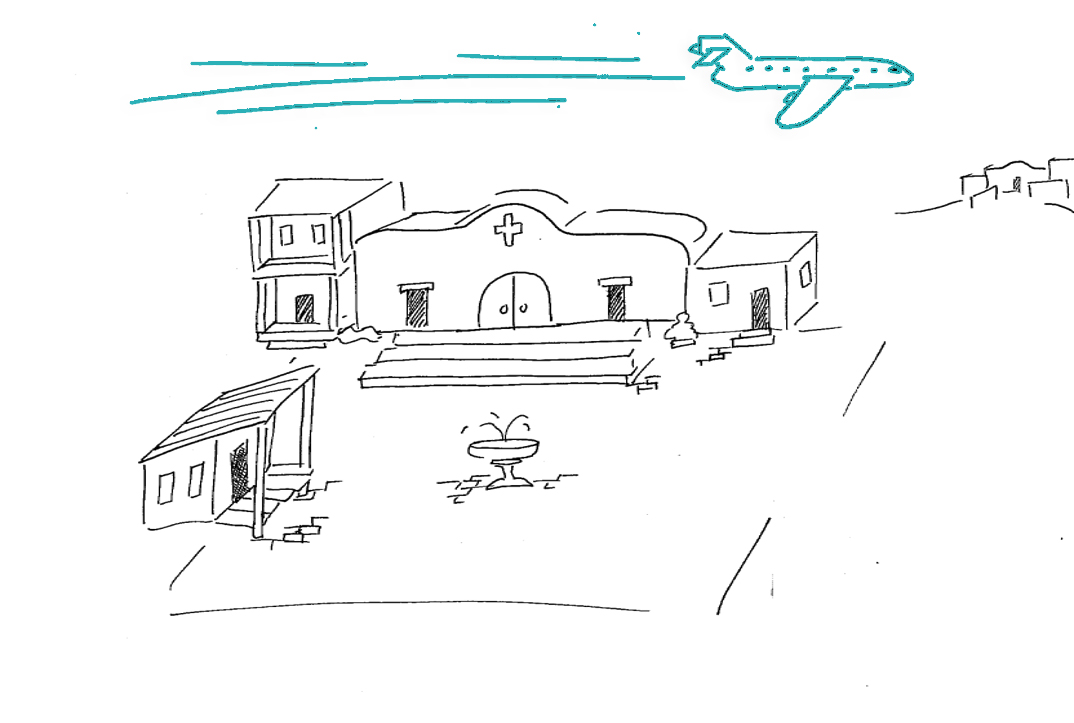
The Plane
Plane-level evaluations are global evaluations with an eye toward organizational outcomes for participants across multiple programs and countries. These evaluations help tell the Unbound story, while communicating the effectiveness of our global program approach in key focus areas, such as our five program pillars.
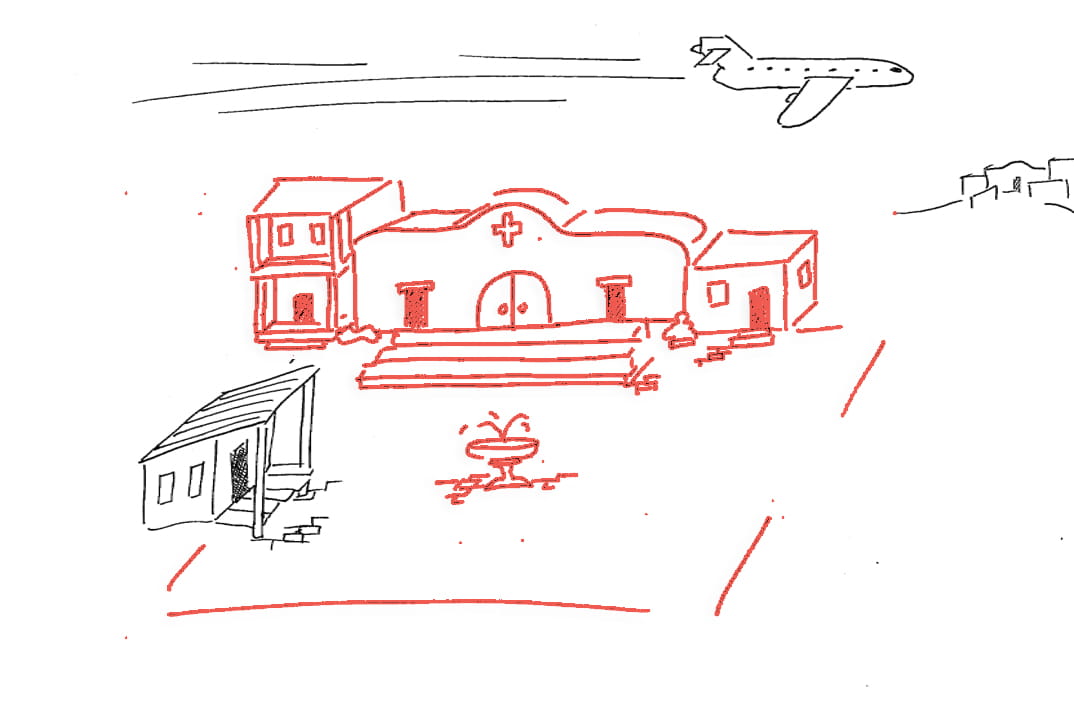
The Plaza
Plaza-level evaluations identify local program accomplishments, but also program needs in the context of the communities that families call home. Families work alongside local program staff to define and measure outcomes, ensuring continuous program improvement.
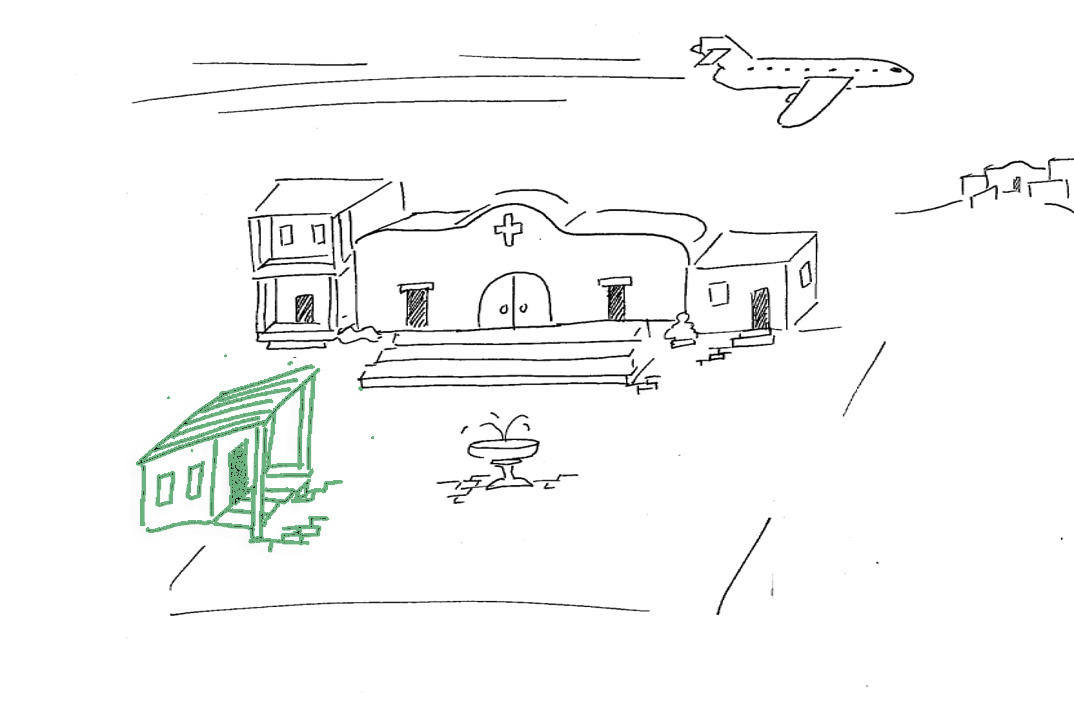
The Porch
Letter writing, part of the one-to-one sponsorship model, provides direct feedback between sponsored friend and sponsor regarding the impact of sponsorship. This allows us to understand and communicate outcomes on a very personal level. This decentralized approach to overcoming poverty empowers families to self-assess their situations, set goals and create solutions tailored to their unique needs. Poverty Stoplight is one tool used for the decentralized approach.
Unbound's Goal Orientation powered by Poverty Stoplight
Poverty Stoplight is a mobile technology and social innovation platform developed by Fundación Paraguaya that seeks to activate the potential of families and communities to lift themselves out of poverty.
Partnering with Fundación Paraguaya, Unbound is currently the largest implementor of the Poverty Stoplight methodology worldwide, with 250,000-plus active participants across three regions of the world. We refer to how we use this platform as “Unbound’s Goal Orientation powered by Poverty Stoplight.”
Unbound’s Goal Orientation powered by Poverty Stoplight connects to Unbound’s evaluation framework, activating the Porch and informing the Plaza and Plane.
The methodology is not only a self-assessment survey but an intervention model, empowering families with the data and awareness to make decisions about their futures and engage support resources and effective solutions.
Using the Poverty Stoplight’s standard dimensions also allow Unbound to understand the impact of our programs at a global level across different locations and contexts, and new programs may be developed at the community level in response to the similar priorities families identify.
Owning Poverty With Poverty Stoplight
As the largest implementor of the Poverty Stoplight methodology worldwide, Unbound is using the reflections from the survey to direct change while adding to the bank of anti-poverty solutions being built by communities around the world. See Poverty Stoplight in action and learn how the tool helped Teresa and her family unlock their potential to overcome poverty.
How we hold ourselves accountable
Accountability and transparency are hallmarks of our programs, and we have safeguards in place to ensure it stays this way.
Financial and program audits are conducted in all program locations on a regular basis, so that we know those participating in our programs are being provided the intended benefits and services and being empowered to direct their own development. Additionally, Unbound regularly collaborates with external organizations to evaluate the cost effectiveness of our program.
In addition, the Unbound Governing Board monitors the integrity and accountability of our operations, defining the outcomes expected and analyzing our progress.
Our ongoing commitment to being good stewards of the funds entrusted to us earns us top ratings from independent charity evaluators like Candid, Charity Navigator and CharityWatch, among others.

90%
of our expenses in 2025 were for program support.

$113.2 million
in direct assistance was sent to programs around the world in 2025.


Charity Navigator awarded Unbound 4 out of 4 stars and the highest obtainable score of 100 in the areas of accountability and transparency.

30+
professional evaluators on staff worldwide monitor our progress.
ADDITIONAL RESOURCES
Learn more about how we walk with families on their paths out of poverty, the impact of our efforts and our expertise in international development by visiting some of the resources below.